


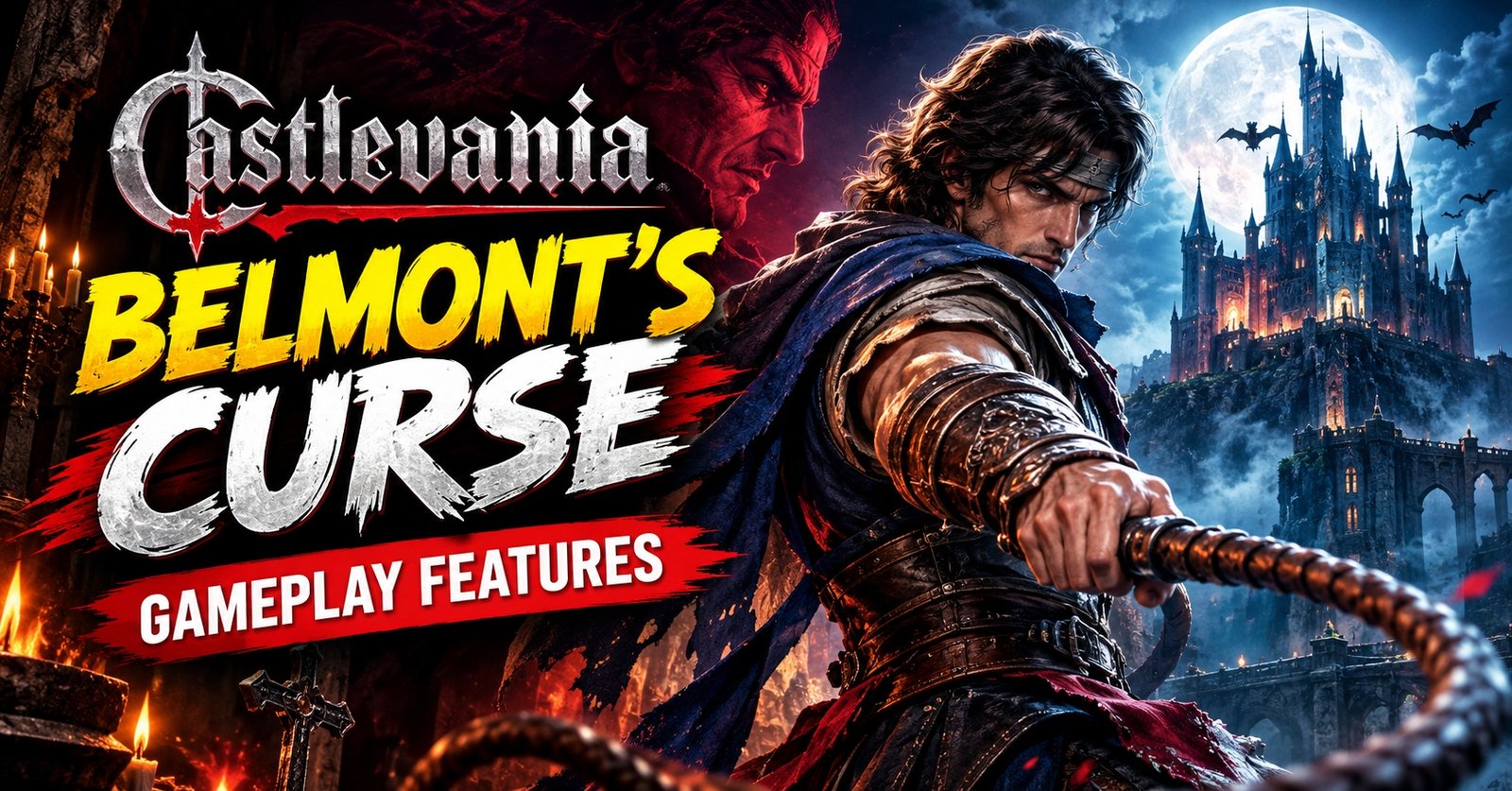

The Castlevania Belmont’s Curse gameplay features bring classic vampire-hunting action into a faster, exploration-focused adventure. Released in October 2026, the game follows Rose Belmont through a monster-infested version of medieval Paris, combining whip-based combat, challenging bosses, weapon customisation, and supernatural abilities. Developed by Konami and Evil Empire, with advisory support from Motion Twin, this 2D action-exploration game builds on the series’ gothic atmosphere while introducing new ways to fight and move through dangerous environments. Its defining feature is the legendary Vampire Killer whip, which serves as both a weapon and a traversal tool. Tarot-inspired Arcana abilities, powerful relics, and familiar Castlevania enemies add further depth to the experience.
What Is Castlevania: Belmont’s Curse?
Castlevania: Belmont’s Curse is a 2D action-exploration game set in 1499, when monstrous creatures threaten Paris. The story takes place 23 years after Castlevania III: Dracula’s Curse and follows Rose Belmont, the daughter of Trevor Belmont and Sypha Belnades.
Rose enters a dangerous world filled with supernatural enemies, hidden threats, and dark secrets. Her journey takes her through burning streets, underground passages, and the imposing halls of Dracula’s castle.
Konami and Evil Empire developed the game, with Motion Twin providing advisory support. The result combines traditional Castlevania themes with a modern approach to movement, exploration, and combat.
Rather than relying on straightforward stage progression alone, the adventure encourages players to explore environments, discover equipment, and learn how different abilities work together. These elements make the Castlevania Belmont’s Curse gameplay features important for both returning fans and newcomers.
1. Faster Whip Combat and Flexible Movement

The Vampire Killer is central to the gameplay experience. As a legendary Belmont weapon, the whip remains essential for defeating monsters, but its role extends beyond attacking enemies.
Rose can use the whip to move through environments more freely. Swinging and manoeuvring with it adds a platforming dimension to exploration, allowing players to approach obstacles and encounters in different ways.
This movement system also changes how combat feels. Instead of treating the whip as a simple attack button, players can combine positioning, timing, and movement to create openings against dangerous opponents.
Mastering the whip should therefore be a priority for players who want to explore efficiently and handle demanding encounters. Its combination of offensive and traversal functions gives Belmont’s Curse a distinct identity within the action-platforming genre.
2. Challenging Boss Battles and Familiar Enemies
Boss encounters are another major part of the Castlevania Belmont’s Curse gameplay features. The adventure includes familiar series antagonists alongside new and unexpected threats.
Confirmed returning bosses include Death, Medusa, and Carmilla. The game also introduces an unusual interpretation of Joan of Arc as a new boss encounter.
These battles test more than basic attacking skills. Players must observe enemy behaviour, recognise attack patterns, maintain suitable positioning, and choose the right moment to strike.
Boss fights also connect with the game’s Arcana system. Defeating certain bosses allows their powers to be sealed into tarot cards, turning major encounters into opportunities to unlock additional abilities.
For Castlevania fans, the combination of familiar enemies and new interpretations offers a reason to pay attention to both the series’ history and its changing combat design.
3. The Arcana System and Tarot-Based Powers
The Arcana system introduces a supernatural ability mechanic inspired by tarot cards. After defeating certain bosses, Rose can seal their powers into cards and use those abilities during her adventure.
These cards provide access to spells and unique special actions. As a result, boss encounters can influence how players approach later battles and other gameplay situations.
The system also adds another layer to combat decisions. Different abilities may suit different encounters, so players benefit from understanding what their available powers can do rather than relying on a single attack strategy.
Arcana gives the game a fresh interpretation of the supernatural abilities associated with Castlevania. It connects progression with major encounters while allowing players to experiment with different ways of dealing with enemies.
However, players should distinguish confirmed mechanics from speculation. The official feature descriptions establish the tarot-card system and its boss-linked powers, but individual ability effects should be checked in the game rather than assumed.
4. Seven Weapon Categories and Relic Customisation
The game’s equipment system offers more ways to personalise Rose’s combat style. Konami has confirmed weapons across seven distinct categories, giving players options beyond the legendary whip.
Relics provide another important layer of customisation. These items can trigger powerful offensive or defensive effects, helping players shape their approach to different encounters.
Equipment is discovered through exploration, encouraging players to investigate their surroundings instead of focusing exclusively on the next enemy. Finding new gear can open up additional tactical possibilities and make experimentation more rewarding.
This system gives players room to develop a preferred fighting style. Some may prioritise aggressive attacks, while others may favour equipment that supports defence or more controlled encounters.
The exact effectiveness of any combination depends on the equipment available and the situation. Still, the combination of weapon categories, relics, and Arcana powers creates several interacting systems for players to learn.
5. Exploration Across Gothic Medieval Paris
The setting is one of the most recognisable Castlevania Belmont’s Curse gameplay features. The adventure takes place in Paris in 1499, with monstrous creatures emerging as the city falls into chaos.
Burning streets, dark underground areas, and the looming castle establish a gothic atmosphere. These locations provide more than a visual backdrop, as exploration is a core part of the game’s design.
Players travel through environments while encountering enemies, obstacles, and opportunities to discover equipment. The whip’s movement abilities also connect directly with this exploration, making traversal an important part of the experience.
The game draws on familiar Castlevania imagery while presenting it through refined visuals and new stage designs. Its combination of traditional gothic elements and more colourful presentation helps distinguish it from earlier entries.
Exploration-focused gameplay also rewards curiosity. Looking beyond the most obvious route can reveal useful discoveries, making careful movement and environmental awareness valuable throughout the adventure.
6. A Blend of Classic Castlevania and Modern Action
Belmont’s Curse aims to preserve the series’ identity while updating its gameplay for modern audiences. Its 2D action-exploration structure keeps the focus on movement, combat, dangerous enemies, and mysterious locations.
The Vampire Killer remains a defining part of the experience, connecting Rose to the Belmont family legacy. Meanwhile, the Arcana system and expanded equipment options introduce mechanics that give this instalment its own character.
The game’s faster movement and flexible combat also support a more active style of play. Players must think about how they approach enemies and navigate obstacles rather than depending entirely on familiar attack patterns.
For long-time fans, the returning enemies and gothic atmosphere provide recognisable elements. For new players, the exploration structure and customisation systems offer several ways to learn the game’s mechanics.
The balance between tradition and experimentation is central to its appeal. Belmont’s Curse does not abandon its roots; instead, it uses established series elements as the foundation for a different adventure.
7. Platforms, Release Date, and Who Should Play It
Castlevania: Belmont’s Curse launched in October 2026. The game is available for PlayStation 5, Xbox Series X|S, PC, and Nintendo Switch.
Its gameplay is particularly relevant to players who enjoy action-platformers, exploration-driven adventures, and games with challenging boss encounters. Fans of earlier Castlevania titles may also appreciate the returning characters, classic monsters, and gothic setting.
Players who prefer customising their combat approach may find the weapon and relic systems especially interesting. Those who enjoy mastering movement mechanics can focus on learning how to use the whip effectively during exploration and battles.
However, the experience is built around active combat and platforming. Players looking for a slower, story-only adventure should consider that distinction before choosing the game.
Ultimately, the best reason to try Belmont’s Curse is its combination of familiar Castlevania themes with new movement and combat systems. Its appeal depends on how much you enjoy learning enemy patterns, exploring dangerous environments, and experimenting with different abilities.
Conclusion
The Castlevania Belmont’s Curse gameplay features combine classic vampire-hunting action with faster movement, challenging boss fights, and deeper customisation. Rose Belmont’s Vampire Killer whip works as both a weapon and a traversal tool, while the Arcana system turns defeated bosses into sources of supernatural powers.
Seven weapon categories, relic effects, and exploration-based discoveries provide further ways to shape the experience. Meanwhile, the gothic streets of 1499 Paris and the return of familiar enemies preserve the atmosphere that defines the franchise.
For fans of 2D action games, Belmont’s Curse offers a mix of platforming, combat, exploration, and character progression. Its strongest appeal lies in how it builds on Castlevania’s traditions while giving Rose Belmont her own adventure.
FAQs
What Are the Main Castlevania Belmont’s Curse Gameplay Features?
The main features include whip-based combat, flexible traversal, challenging boss battles, the tarot-inspired Arcana system, seven weapon categories, relic customisation, and exploration through gothic environments. Together, these mechanics combine traditional Castlevania action with new gameplay options.
Who Is the Main Character in Castlevania: Belmont’s Curse?
The main character is Rose Belmont, the daughter of Trevor Belmont and Sypha Belnades. She explores monster-infested Paris in 1499 and uses the legendary Vampire Killer whip to battle supernatural enemies.
How Does the Whip Work in Belmont’s Curse?
The Vampire Killer serves as both a combat weapon and a movement tool. Rose can attack enemies with it and use its traversal mechanics to move through environments more freely. Learning its timing and movement options is important for combat and exploration.
What Is the Arcana System in Belmont’s Curse?
The Arcana system uses tarot cards to provide supernatural abilities. Certain defeated bosses can be sealed into cards, allowing Rose to use their powers for spells and special actions. This system adds another layer to combat and progression.
Which Bosses Appear in Castlevania: Belmont’s Curse?
Confirmed bosses include returning series characters Death, Medusa, and Carmilla, alongside a new interpretation of Joan of Arc. These encounters challenge players to learn enemy behaviour and adapt their combat approach.
Which Platforms Support Castlevania: Belmont’s Curse?
Castlevania: Belmont’s Curse is available on PlayStation 5, Xbox Series X|S, PC, and Nintendo Switch. It launched in October 2026 and combines 2D action with exploration, platforming, and equipment customisation.
For more updates visit: RANKIVO