


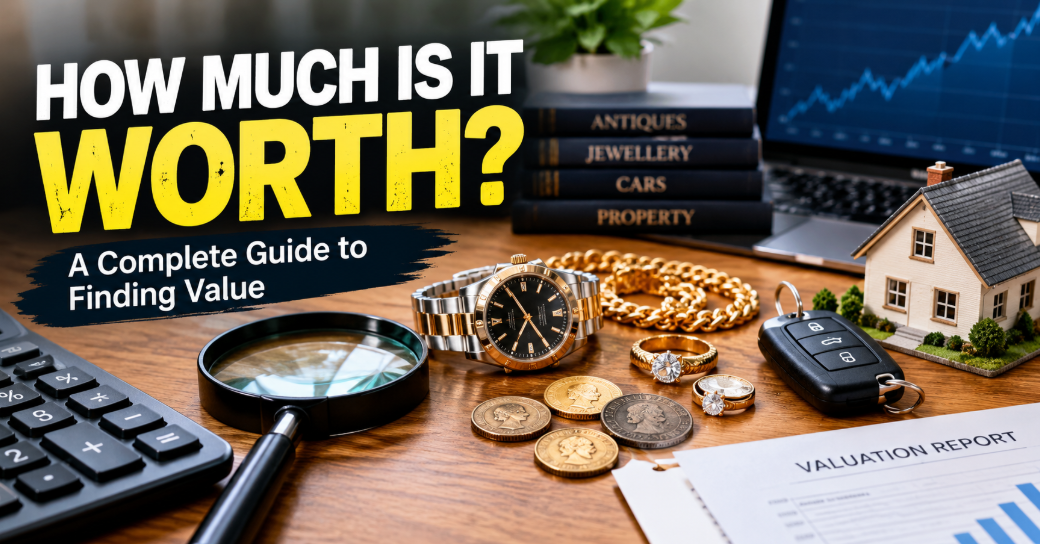

When you ask, “how much is it worth?”, the answer depends on what you are trying to value. An old watch, piece of jewellery, car, house, collectible or business can have very different values depending on its condition, demand and market.
The amount someone paid for an item is not always the same as its current value. Likewise, an advertised price does not necessarily mean that buyers are willing to pay that amount.
Understanding how value is calculated can help you avoid overestimating or underestimating an item. Whether you are selling something, buying it, checking an inheritance or simply curious, the right valuation method makes a significant difference.
What Does “How Much Is It Worth?” Actually Mean?
The phrase “how much is it worth?” usually refers to the current monetary value of something. However, there can be several different types of value.
Market value is the amount an item could reasonably sell for under normal conditions. Retail value may be higher because it includes a seller’s costs and profit. Meanwhile, quick-sale value can be lower when something needs to be sold quickly.
Replacement value is another concept. It represents the estimated cost of replacing an item with something similar. This can be particularly relevant when considering valuable personal possessions.
Therefore, there is not always one exact answer. The appropriate value depends on the item and the reason you need the valuation.
How Is Something’s Value Determined?
Several factors influence how much something is worth. The first is demand. An item that many people want can command a higher price than an otherwise similar item with little interest.
Condition also matters. A well-maintained item with minimal damage will generally attract more interest than one with significant wear. For collectibles and antiques, originality can be particularly important.
Age can influence value, but older does not automatically mean more valuable. Some newer products become highly sought after because they are rare, discontinued or associated with a particular trend.
Brand and provenance can also affect value. A recognised manufacturer, designer or documented history may increase buyer interest when the information can be verified.
How Much Is an Item Worth Based on Recent Sales?
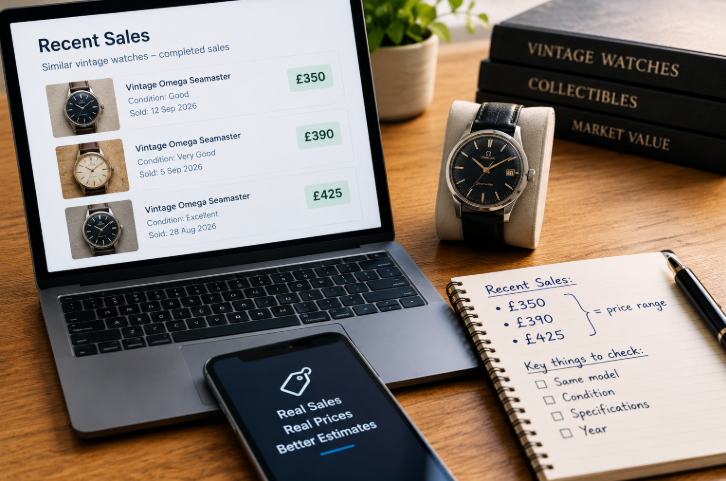
One of the most useful ways to estimate value is to examine recent completed sales. Actual transactions can provide a better indication than asking prices.
For example, imagine similar vintage watches have recently sold for £350, £390 and £425. These transactions provide a useful range for estimating another watch with similar characteristics.
However, the comparison needs to be genuine. A different model, condition, specification or year can significantly change the price.
Recent sales are especially useful for collectibles, electronics, vehicles, furniture and other products with active resale markets.
How Much Is It Worth If It Is an Antique?
Antiques can be difficult to value because rarity, condition, age, craftsmanship and history can all influence the price.
An antique that looks ordinary may have significant value if it was produced by a recognised maker or has unusual characteristics. Conversely, an item that looks extremely old may have limited demand.
Marks, signatures, manufacturing details and original features can provide useful clues. Repairs and alterations can also affect the final valuation.
For valuable antiques, a professional appraisal may provide a more reliable assessment than a general online price estimate.
How Much Is Jewellery Worth?
Jewellery valuation can involve several different factors. The material, weight, purity, gemstones, craftsmanship, brand and condition can all influence the result.
Gold jewellery, for example, has an underlying metal value. Its resale price can also depend on design and demand. Designer jewellery may command a premium beyond the value of its raw materials.
Gemstones require additional consideration. Their colour, clarity, cut, carat weight and characteristics can affect their value.
It is important to distinguish between an insurance valuation and a likely selling price. These figures can serve different purposes and may not be the same.
How Much Is a Car Worth?
A vehicle’s value usually depends on its make, model, age, mileage, condition and specification. Service history and ownership history can also affect buyer confidence.
Market demand plays an important role as well. Popular models may retain value better than vehicles with limited demand.
Modifications can have mixed effects. Some improvements may attract buyers, while others can reduce the number of people interested in the vehicle.
The best estimate usually comes from comparing similar cars currently being sold and recently sold in the same market.
How Much Is a House Worth?
Property valuation is more complex because location has a major influence. Two properties with similar sizes can have very different values if they are in different areas.
Bedrooms, floor area, property condition, parking, garden space and local demand can all affect the price. Recent sales of comparable properties are often useful when estimating market value.
An online property estimate can provide an initial indication, but it should not automatically be treated as an exact valuation.
For important financial decisions, a professional valuation or local property assessment may be appropriate.
How Much Is a Collectible Worth?
Collectibles can include coins, trading cards, toys, sports memorabilia, books and other specialist items. Their value can change significantly depending on collector demand.
Rarity is important, but scarcity alone does not guarantee a high price. Collectors generally care about whether the item is desirable within its particular market.
Condition can be especially important. Original packaging, grading, signatures and documented authenticity may have a major effect on value.
The market can also change over time. An item that is highly popular today may attract less interest in the future, while previously overlooked collectibles can become fashionable.
How Much Is a Business Worth?
Business valuation involves considerably more than looking at revenue. Profitability, assets, debts, growth prospects, customers and industry conditions can all affect value.
A business generating strong profits may have a different valuation from one with similar revenue but much higher expenses.
Different valuation approaches can be used depending on the business. These may consider earnings, assets, cash flow or comparable transactions.
Because business valuation can involve significant financial consequences, complex cases may require professional advice rather than a simple online estimate.
Why Online Valuations Can Be Different
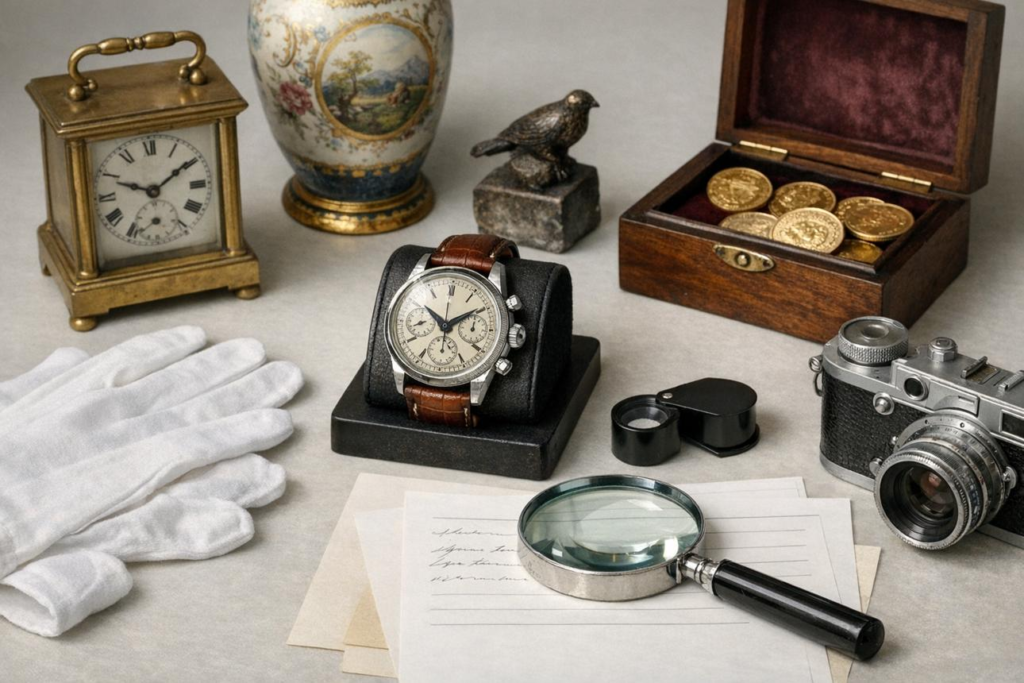
You may find several different answers when searching for how much something is worth online. This does not necessarily mean that one estimate is wrong.
Different websites may use different data, assumptions and valuation methods. One estimate may focus on retail prices, while another may consider resale transactions.
The condition of the specific item can also create a major difference. An online estimate usually cannot inspect every detail of an individual product.
For that reason, online estimates are best treated as starting points rather than guaranteed selling prices.
How to Get a More Accurate Value
Start by identifying exactly what you have. Record the brand, model, age, specifications, measurements and other distinguishing details.
Next, assess its condition honestly. Look for damage, repairs, missing parts and signs of wear. Original packaging and documentation may also be relevant.
Then compare the item with recent sales of genuinely similar products. Avoid relying only on the highest advertised price because asking prices are not guaranteed transaction prices.
If the item is particularly valuable, rare or difficult to identify, consider obtaining a professional appraisal. Specialist knowledge can be useful when small details have a substantial effect on value.
Does the Selling Price Equal the True Value?
Not always. A seller may advertise an item for £1,000, but that does not mean buyers will pay £1,000.
Likewise, someone might accept £700 because they need a quick sale. That transaction does not necessarily establish the normal market value.
The circumstances surrounding a sale matter. A normal transaction between a willing buyer and seller can provide a stronger indication than a rushed or unusual sale.
How Much Is It Worth Before Selling?
Before selling, it is useful to establish a realistic price range rather than choosing a single number.
Research similar items, examine their condition and consider current demand. You can then decide whether you want the highest possible price or a quicker sale.
Remember to account for selling fees, delivery costs, repairs and other expenses. The amount you receive after these costs may be considerably lower than the advertised selling price.
A realistic valuation can therefore help you choose an appropriate asking price.
Conclusion
Knowing how much something is worth requires more than finding the highest price online. Value can depend on demand, condition, rarity, age, brand, location, authenticity and recent market activity.
The most useful starting point is usually to identify the exact item and compare it with similar items that have actually sold. From there, you can adjust the estimate according to condition and other important characteristics.
For valuable or unusual assets, a qualified professional can provide a more detailed assessment. Ultimately, the most meaningful value is the price supported by the relevant market and the circumstances of the sale.
FAQs
How do I find out how much something is worth?
Identify the item accurately, assess its condition and research recent sales of similar items. For rare or expensive possessions, a professional appraisal can provide additional confidence.
How much is it worth if I only know the brand?
Knowing the brand can help, but it is usually not enough for an accurate valuation. The model, age, condition, specifications and current demand may also be important.
Is an online valuation accurate?
An online valuation can provide a useful starting estimate, but it may not reflect the exact condition or characteristics of your item. Professional valuations may be more suitable for valuable possessions.
How much is my old item worth?
Age alone does not determine value. Rarity, condition, manufacturer, originality and collector demand can all affect how much an old item is worth.
How much is something worth if it is rare?
Rarity can increase value when there is strong demand for the item. However, a rare object with little buyer interest may still have a relatively low market value.
Does condition affect how much something is worth?
Yes. Damage, wear, repairs, missing components and alterations can affect value. In some markets, excellent original condition can make a substantial difference.
For more updates visit: RANKIVO