




Weather Fort Worth can change noticeably from one season to another. The city experiences hot summers, mild autumns, cool winters and warm springs.
Located in North Texas, Fort Worth has a humid subtropical climate with plenty of sunshine. However, temperatures can shift quickly when weather fronts move through the region.
Knowing the typical weather in Fort Worth can help with travel plans, outdoor activities, clothing choices and daily routines. It is also useful to understand how conditions vary throughout the year.
What Is the Weather Like in Fort Worth?
Fort Worth generally has warm to hot conditions for much of the year. Summer is especially hot, while winter brings cooler temperatures and occasional cold spells.
Average temperatures vary significantly between seasons. Summer afternoons can become very hot, while winter mornings may feel cold, particularly when a strong cold front passes through.
Rain can occur throughout the year. Spring and autumn can bring periods of thunderstorms, while summer often includes longer stretches of dry and sunny weather.
The weather can also change quickly during transitional seasons. A warm afternoon may be followed by a much cooler evening after a cold front arrives.
Fort Worth Weather by Season
Spring Weather in Fort Worth
Spring usually brings warmer temperatures and increasing rainfall. March, April and May can feel comfortable one day and stormy the next.
Daytime temperatures generally rise throughout the season. By May, warm conditions are common, although occasional cool periods can still occur.
Spring is also an important thunderstorm season in North Texas. Strong storms can produce heavy rain, strong winds, hail and, in some situations, tornadoes.
For visitors, spring can be an enjoyable time to explore Fort Worth. However, checking the latest forecast before outdoor plans is particularly important.
Summer Weather in Fort Worth
Summer is the hottest period of the year in Fort Worth. June, July and August commonly bring high temperatures, strong sunshine and warm nights.
July and August are typically the hottest months. Average summer highs can reach the mid-90s Fahrenheit, while overnight temperatures often remain in the 70s.
Heat can become uncomfortable during the afternoon. Outdoor activities are often easier in the morning or later in the evening when temperatures begin to fall.
Thunderstorms can still occur during summer. However, extended hot and dry periods are also common.
Autumn Weather in Fort Worth
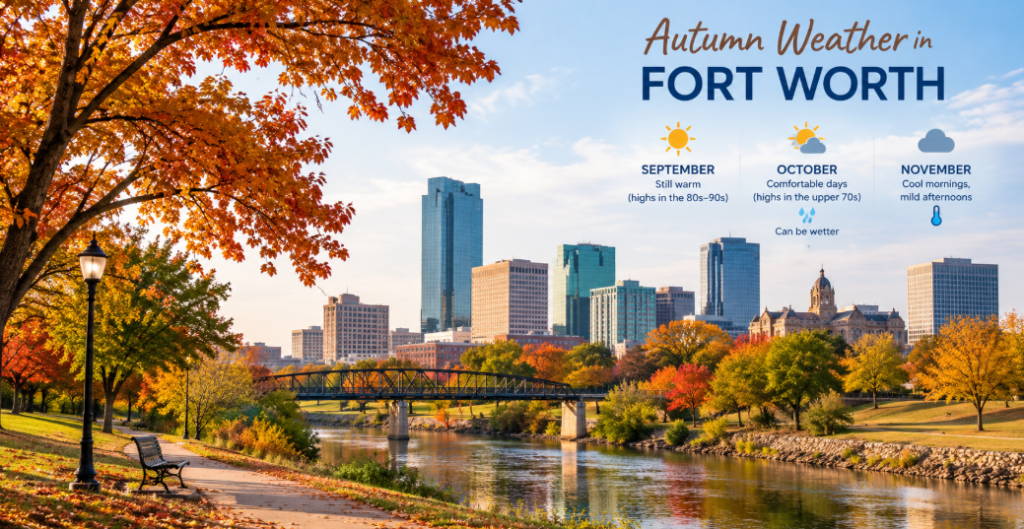
Autumn gradually brings relief from the summer heat. September can remain very warm, while October usually feels more comfortable.
October has typical daytime highs around the upper 70s Fahrenheit and cooler nights. It can also be a relatively wet month compared with some other parts of the year.
November brings a further drop in temperature. Cool mornings and mild afternoons become increasingly common as winter approaches.
Autumn is therefore a popular period for outdoor activities. Even so, weather conditions can vary from one week to another.
Winter Weather in Fort Worth
Winter in Fort Worth is generally cooler rather than consistently freezing. December, January and February bring the lowest average temperatures.
Winter days can still be mild, especially when warmer air moves into North Texas. However, cold fronts can produce sharp temperature drops.
Freezing temperatures are possible during winter. Snow and ice can also occur, although significant snowfall is not a regular feature of the local climate.
The biggest winter weather changes often happen when strong fronts move through the region. This can create large differences between temperatures on consecutive days.
Average Temperatures in Fort Worth
Fort Worth’s long-term climate averages show substantial seasonal variation. Typical annual temperatures range from cool winter conditions to very hot summer afternoons.
January is generally the coldest month. Long-term averages from the National Weather Service show January maximum temperatures around 55°F and minimum temperatures around 36°F.
July and August are normally the hottest months. Average maximum temperatures during these months are around 94°F, with average minimum temperatures in the mid-70s.
October provides a noticeable seasonal transition. Average October temperatures are around 77°F during the day and 56°F at night.
These averages describe typical climate conditions rather than a specific day’s forecast. Actual temperatures can be considerably higher or lower.
Rainfall and Storms in Fort Worth
Rainfall is possible throughout the year in Fort Worth. The city receives roughly 38 inches of precipitation during a typical year.
Some months are considerably wetter than others. October can receive substantial rainfall, while summer months can experience longer dry periods.
Thunderstorms are an important part of the local weather pattern. Spring is particularly associated with severe thunderstorms across North Texas.
Storms may bring heavy rain, lightning, strong winds and hail. Severe weather can also develop rapidly, so residents and visitors should monitor official forecasts during storm periods.
Does Fort Worth Get Snow?
Fort Worth can receive snow, but substantial snowfall is relatively uncommon. Most winter precipitation is rain rather than snow.
Snow or wintry precipitation becomes possible when sufficiently cold air combines with suitable atmospheric conditions. Some winters may pass with little or no measurable snow.
Ice can sometimes create more practical problems than snow. Freezing conditions may affect roads, bridges and outdoor surfaces during significant winter weather events.
For anyone visiting Fort Worth during winter, checking the short-term forecast is more useful than relying only on seasonal averages.
When Is the Best Time to Visit Fort Worth?
The most comfortable weather depends on the activities planned. Spring and autumn generally offer a balance between warm temperatures and less intense summer heat.
October can be particularly pleasant, with warm afternoons and cooler evenings. However, rainfall can occur, so flexible plans can be useful.
Summer may suit travellers who enjoy hot weather, but afternoon heat can make prolonged outdoor activities challenging.
Winter can provide comfortable daytime conditions on mild days. Temperatures can change quickly, so visitors should prepare for both mild and colder conditions.
How Quickly Can Fort Worth Weather Change?
Fort Worth weather can change quickly because of its location in North Texas. Cold fronts can move through the region and produce significant temperature changes.
A day that begins warm may become considerably cooler later. Thunderstorms can also develop rapidly when atmospheric conditions become favourable.
This is why long-range climate information should not replace a current forecast. If you have plans for a particular day, check the latest local forecast closer to the time.
Weather Fort Worth and Severe Weather
Severe weather is an important consideration in Fort Worth. North Texas can experience thunderstorms capable of producing damaging winds, large hail and tornadoes.
Severe weather is not guaranteed on any particular day. However, residents should take official warnings seriously when they are issued.
During periods of severe weather, conditions can change rapidly. Staying aware of forecast updates can help people make safer decisions about travel and outdoor activities.
What to Wear in Fort Worth
Clothing choices depend heavily on the season. Summer usually calls for lightweight clothing because daytime temperatures can become extremely hot.
Spring and autumn are more variable. Layering can make it easier to adjust when temperatures change between morning and afternoon.
Winter generally requires warmer layers, particularly during cold fronts. A jacket can be useful even when daytime temperatures are relatively mild.
Rain protection can also be useful during wetter periods. Comfortable footwear is especially important for visitors planning to explore the city on foot.
Conclusion
Weather Fort Worth varies throughout the year, from very hot summers to cooler winter conditions. Spring and autumn bring changing temperatures and the possibility of thunderstorms, while winter can include occasional freezing weather.
Understanding seasonal patterns makes it easier to plan trips, outdoor activities and everyday routines. However, climate averages cannot predict the conditions on a specific day.
For current conditions, always check the latest local forecast before travelling or making weather-sensitive plans. This is particularly important during periods of severe thunderstorms, extreme heat or winter weather.
FAQs
What is the weather Fort Worth like today?
The weather Fort Worth experiences today depends on current atmospheric conditions. Temperatures, rainfall, wind and storm chances can change during the day, so a current local forecast should be checked for the latest information.
What is the hottest month in Fort Worth?
July and August are typically the hottest months in Fort Worth. Average high temperatures during these months are generally in the mid-90s Fahrenheit.
What is the coldest month in Fort Worth?
January is generally the coldest month. Average January temperatures are much lower than summer levels, although individual cold fronts can make conditions considerably colder.
Does it snow in Fort Worth?
Yes, snow can occur in Fort Worth, but significant snowfall is uncommon. Winter precipitation is more often rain, although freezing conditions can occasionally develop.
Does Fort Worth get tornadoes?
Severe thunderstorms and tornadoes can occur in the wider North Texas region, including areas around Fort Worth. Conditions vary by day and season, so official warnings should be monitored during severe weather.
Is Fort Worth hot in summer?
Yes, Fort Worth summers are typically very hot. July and August commonly have daytime temperatures in the 90s Fahrenheit, with warm evenings as well.
For more updates visit: RANKIVO