


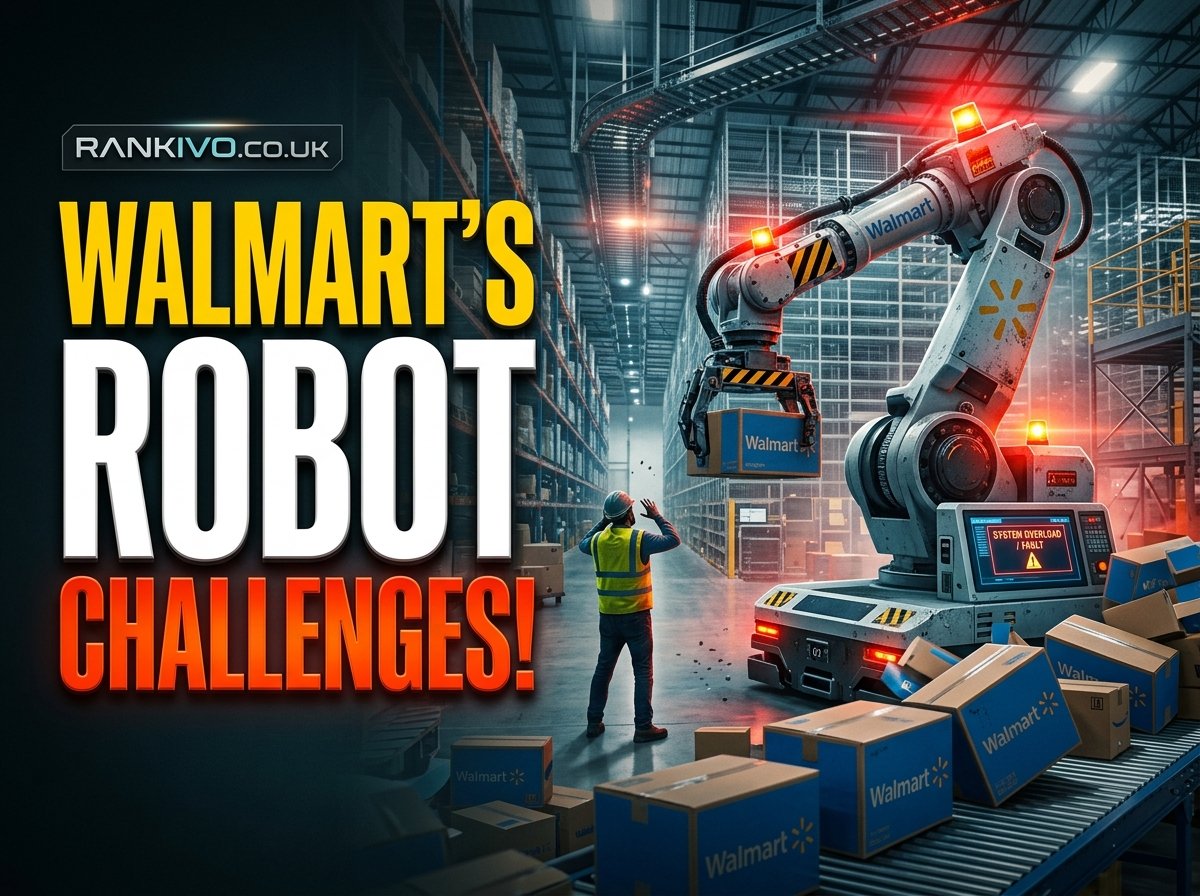

Walmart warehouse robot automation challenges highlight the difficulties of using advanced machines to move, sort and manage products across a large retail supply chain. Robots can help warehouses handle repetitive tasks, improve inventory movement and support faster order fulfilment. However, introducing automation also creates challenges involving cost, software integration, worker training, safety and system reliability. Walmart operates a complex distribution network, so even small technical problems can affect operations across multiple stages. Understanding these challenges explains why warehouse automation requires more than installing robots. It depends on reliable technology, well-trained employees and careful management.
What Is Walmart Warehouse Robot Automation?
Walmart warehouse robot automation involves using robotic systems, sensors, software and automated equipment to support the movement of goods through distribution centres and fulfilment facilities. These technologies can assist with transporting products, sorting parcels, managing inventory and preparing orders for stores or customers.
Traditional warehouses rely heavily on employees to move goods manually and operate equipment. Automation can reduce some repetitive physical tasks and help facilities process products more consistently. However, robots do not remove the need for human supervision, maintenance or decision-making.
Walmart’s scale makes the subject particularly important. Its distribution operations must support a broad range of products, store requirements and customer expectations. Automation must therefore work reliably within existing warehouse processes rather than operate as an isolated technology.
The Main Walmart Warehouse Robot Automation Challenges
High Initial Investment and Ongoing Costs
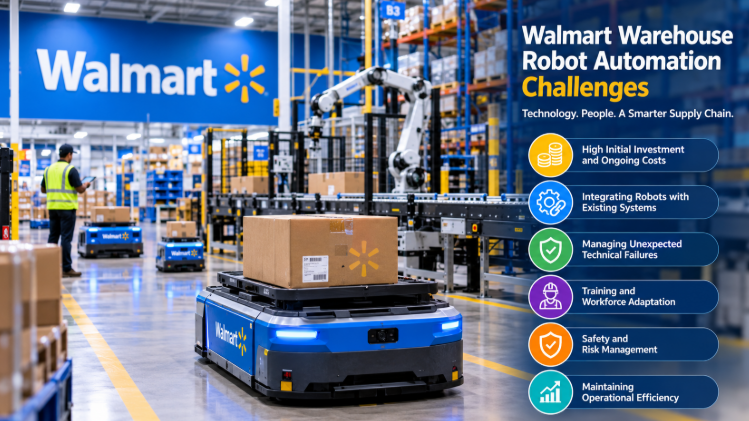
One of the biggest Walmart warehouse robot automation challenges is the financial commitment required to introduce and maintain robotic systems. The investment can include robots, charging equipment, sensors, conveyor modifications, safety barriers, software and changes to warehouse layouts.
The purchase price represents only part of the total cost. Businesses must also account for installation, integration, employee training, maintenance and future upgrades. If a facility needs significant structural changes, implementation can become more expensive and disruptive.
Walmart must also consider whether an automation project delivers enough value over time. Faster product movement may improve productivity, but the benefits depend on the system’s utilisation, reliability and operating costs. A robot that sits idle because of workflow problems cannot deliver its expected return.
Automation decisions therefore require detailed financial planning. Different facilities may need different solutions depending on their size, product mix, order volumes and existing equipment.
Integrating Robots with Existing Warehouse Systems
Robots rarely operate independently in a modern distribution centre. They often need to communicate with warehouse management software, inventory databases, conveyor systems, scanning equipment and order-processing platforms.
This creates a significant integration challenge. If software systems exchange inaccurate information or respond too slowly, robots may receive incorrect instructions or fail to complete tasks as expected. Inventory records can also become inconsistent when automated movements do not register properly.
Older equipment can make integration more difficult. A warehouse may need software updates, new sensors or additional control systems before robots can work effectively alongside existing machinery.
Walmart’s operations also involve different facilities and workflows. A solution that performs well in one distribution centre may require adjustments elsewhere. Successful automation therefore depends on compatibility, testing and ongoing coordination between hardware and software.
Managing Unexpected Technical Failures
Robotic systems can improve consistency, but they still experience faults. Sensors can become dirty or misaligned, components can wear out, batteries may need charging, and software errors can interrupt operations.
These problems become especially serious when automated equipment supports a critical stage of warehouse processing. If one machine stops, other systems may experience delays or congestion. A minor fault can become a wider operational issue when multiple processes depend on the same equipment.
Walmart must balance automation with effective maintenance planning. Facilities need procedures for identifying faults, replacing components and restoring normal operations quickly. Monitoring systems can help teams identify warning signs before equipment fails completely.
Backup processes also matter. Employees may need to redirect goods manually or use alternative equipment during an outage. Without a practical recovery plan, automation can create new dependencies instead of making warehouse operations more resilient.
Workforce Training and Employee Concerns
Developing New Technical Skills
Another important challenge involves preparing employees to work alongside robots. Warehouse automation changes some traditional tasks and creates demand for different skills, including equipment monitoring, troubleshooting and digital system operation.
Employees may need training to operate automated machinery, recognise warning signals and follow updated safety procedures. Maintenance teams may also require specialised knowledge to diagnose faults and coordinate repairs.
Training takes time and resources. If employees do not understand the systems they use, they may struggle to resolve minor problems or recognise unsafe conditions. Clear instructions and accessible support can help reduce these risks.
Walmart must also consider how responsibilities change as automation expands. Effective implementation should explain which tasks remain with employees, which processes robots handle and who takes responsibility when something goes wrong.
Job Security and Workplace Morale
The introduction of warehouse robots can raise concerns about job security. Employees may worry that machines will replace existing roles or reduce opportunities for overtime and career progression.
The actual effect depends on the technology, facility and tasks involved. Automation can reduce the need for some repetitive activities while increasing demand for technical support, maintenance and system supervision. However, new roles may require different qualifications, and workers may not automatically have access to them.
Communication is therefore essential. Employees need realistic information about operational changes, training opportunities and future responsibilities. Providing support for reskilling can help workers adapt while reducing uncertainty.
Automation is more likely to work smoothly when management considers employee experience alongside productivity targets. People remain essential for handling exceptions, making decisions and responding to situations that machines cannot resolve independently.
Safety in Automated Warehouse Environments
Warehouse robots introduce safety requirements that differ from those associated with purely manual operations. Autonomous mobile robots may travel through shared spaces, while robotic arms and automated conveyors can create risks around moving parts.
Facilities must manage routes, access restrictions, emergency stops and clear procedures for maintenance. Employees also need to understand how to work safely near moving equipment and what to do when a robot behaves unexpectedly.
Poorly designed workflows can increase the chance of collisions, blocked pathways or unsafe attempts to clear equipment manually. These problems may become more likely during busy periods when staff face pressure to maintain throughput.
Safety planning must account for the entire working environment rather than the robot alone. Warehouse layouts, lighting, pedestrian routes, equipment placement and employee behaviour all influence risk.
Regular inspections and training can help maintain safe conditions as systems change. Any new robot, software update or layout modification should be assessed before it becomes part of routine operations.
Handling Different Products and Changing Demand
Walmart warehouses handle products with different sizes, shapes, weights and packaging requirements. A robotic system designed to move standard cartons may struggle with irregular packages, fragile items or products that are difficult to grip.
This variety creates technical challenges for robotic picking and sorting. Machines may need specialised grippers, improved vision systems or different handling instructions to deal with particular products. Even then, some exceptions may require human intervention.
Demand also changes throughout the year. Seasonal shopping, promotions and unexpected supply disruptions can create sudden increases in warehouse activity. Automation systems must handle changing volumes without creating bottlenecks.
A system designed for typical daily demand may not perform as expected during a peak period. Businesses therefore need to test capacity, plan maintenance carefully and establish procedures for handling unusually high workloads.
Flexibility is important because warehouse requirements can change as product ranges and fulfilment models evolve. Systems that are difficult to adapt may become costly or less useful over time.
Data Security and Software Reliability
Connected warehouse robots depend on software and data to navigate, identify products and coordinate tasks. This creates another set of challenges involving cybersecurity, access controls and system availability.
Poorly managed access could expose operational systems to unauthorised changes. Software vulnerabilities or network disruptions could also interfere with warehouse activities. The consequences depend on the systems affected and the level of operational dependency.
Warehouse data must also remain accurate. Robots may move products efficiently, but incorrect inventory information can still lead to misplaced goods, picking errors or delays. Automation improves physical processes only when the supporting information is reliable.
Strong cybersecurity practices, controlled access, software updates and backup procedures help reduce these risks. Businesses should also test recovery plans so that employees understand how to respond when digital systems become unavailable.
How Walmart Can Address Warehouse Automation Challenges
Addressing Walmart warehouse robot automation challenges requires a coordinated approach rather than a single technical fix. Companies can begin by evaluating individual warehouse processes and identifying where automation offers a clear operational benefit.
Pilot projects can help teams test equipment under realistic conditions before expanding deployment. These trials should assess reliability, processing speed, safety, integration and employee experience. Results can then guide adjustments to software, workflows and training.
Preventive maintenance is equally important. Regular inspections, performance monitoring and planned component replacement can reduce unexpected downtime. Facilities should also maintain clear escalation procedures so employees know whom to contact when equipment fails.
Workforce development should remain part of the implementation plan. Practical training, transparent communication and opportunities to build technical skills can help employees adapt to new processes.
Finally, performance measurement should go beyond the number of robots installed. Useful measures include order accuracy, downtime, maintenance costs, throughput, safety incidents and the time required to recover from disruptions. These indicators provide a more realistic picture of whether automation is improving warehouse performance.
Conclusion
Walmart warehouse robot automation challenges demonstrate that successful automation involves much more than purchasing advanced machines. High implementation costs, complex system integration, equipment failures, workforce concerns, safety requirements and changing demand can all affect performance.
Robots can support faster and more consistent warehouse operations, but they still depend on reliable software, effective maintenance and skilled employees. Businesses must also prepare for unusual situations that require human judgement or manual intervention.
For Walmart, the long-term value of warehouse automation depends on how well technology fits its operational needs. Careful testing, employee training, strong safety procedures and realistic performance measurements can help reduce implementation risks. The goal is not simply to automate more tasks. It is to build a reliable, flexible and efficient supply chain.
FAQs
What are the biggest Walmart warehouse robot automation challenges?
The main challenges include high implementation costs, integrating robots with existing systems, equipment downtime, employee training, workplace safety and managing different product types. Reliable maintenance and flexible workflows are also essential for effective automation.
Why does Walmart use robots in its warehouses?
Warehouse robots can help move goods, support sorting, improve material handling and reduce repetitive physical tasks. Their purpose is to support warehouse operations and improve efficiency, although the benefits depend on the technology and how each facility uses it.
Can warehouse robots replace Walmart employees?
Robots can automate certain repetitive tasks, but they do not eliminate the need for human workers. Employees remain important for maintenance, supervision, troubleshooting, safety and handling unexpected situations. Automation may change job responsibilities and increase demand for technical skills.
How much does Walmart warehouse robot automation cost?
There is no single cost for Walmart warehouse robot automation. Expenses depend on the type and number of robots, installation requirements, software integration, facility modifications, training and ongoing maintenance. A reliable estimate requires details about the specific project.
What safety risks do warehouse robots create?
Potential risks include collisions, moving machinery, blocked pathways and unsafe interactions between people and automated equipment. Facilities can reduce these risks through suitable layouts, safety controls, employee training, regular inspections and clear emergency procedures.
How can Walmart improve warehouse robot automation?
Walmart can improve automation by testing systems before wider deployment, maintaining equipment regularly and integrating software carefully. Training employees, preparing backup procedures and measuring accuracy, downtime, safety and productivity can also help identify problems and improve long-term performance.
For more updates visit: RANKIVO