



Elon Musk’s SpaceX wireless market entry marks a major shift in the telecommunications industry. SpaceX is moving beyond satellite broadband towards a broader mobile connectivity business that could challenge established wireless carriers. In October 2026, the company announced an agreement to acquire a nationwide portfolio of low-band wireless spectrum in the United States. The move could help Starlink Mobile deliver stronger coverage, including in buildings, while reducing its reliance on traditional mobile network partners. SpaceX has also pursued valuable spectrum assets through a separate agreement with EchoStar. Although these developments strengthen Musk’s ambitions, they do not mean that SpaceX has already replaced conventional mobile networks. The key questions are how the service will work, which companies face the greatest competition, and whether British consumers could eventually benefit.
What Is Elon Musk’s SpaceX Wireless Market Entry?
Elon Musk’s SpaceX wireless market entry describes the company’s expansion from satellite internet into a more direct role in mobile telecommunications. SpaceX already operates Starlink, a satellite network that provides internet access to homes, businesses, vehicles and other users.
Its next step is to expand connectivity to ordinary mobile devices. Instead of relying exclusively on ground-based mobile towers, Starlink Mobile aims to combine satellites with wireless spectrum and terrestrial infrastructure. This approach could help users stay connected in places where conventional networks struggle.
SpaceX is also pursuing a more independent commercial position. Rather than simply supplying satellite coverage through established mobile operators, the company wants greater control over how it delivers connectivity and serves customers.
However, building a mobile network is more complicated than launching satellites. SpaceX must secure regulatory approvals, develop suitable infrastructure, manage network capacity and compete on price, reliability and customer experience.
Why Is SpaceX Entering the Wireless Market?
Expanding Beyond Satellite Broadband
Starlink has established a significant business by delivering internet access through low-Earth-orbit satellites. Its technology is particularly valuable in rural areas, remote locations and places where installing fibre or mobile infrastructure is difficult.
Mobile connectivity creates another opportunity. Consumers already rely on smartphones for messaging, navigation, payments, entertainment and work. A service that combines satellite and terrestrial coverage could address problems that traditional networks cannot solve economically.
SpaceX can also use its existing satellite engineering capabilities and launch operations to support this expansion. These advantages give the company a foundation that a new telecommunications business would otherwise need years to develop.
Reducing Dependence on Mobile Network Partners
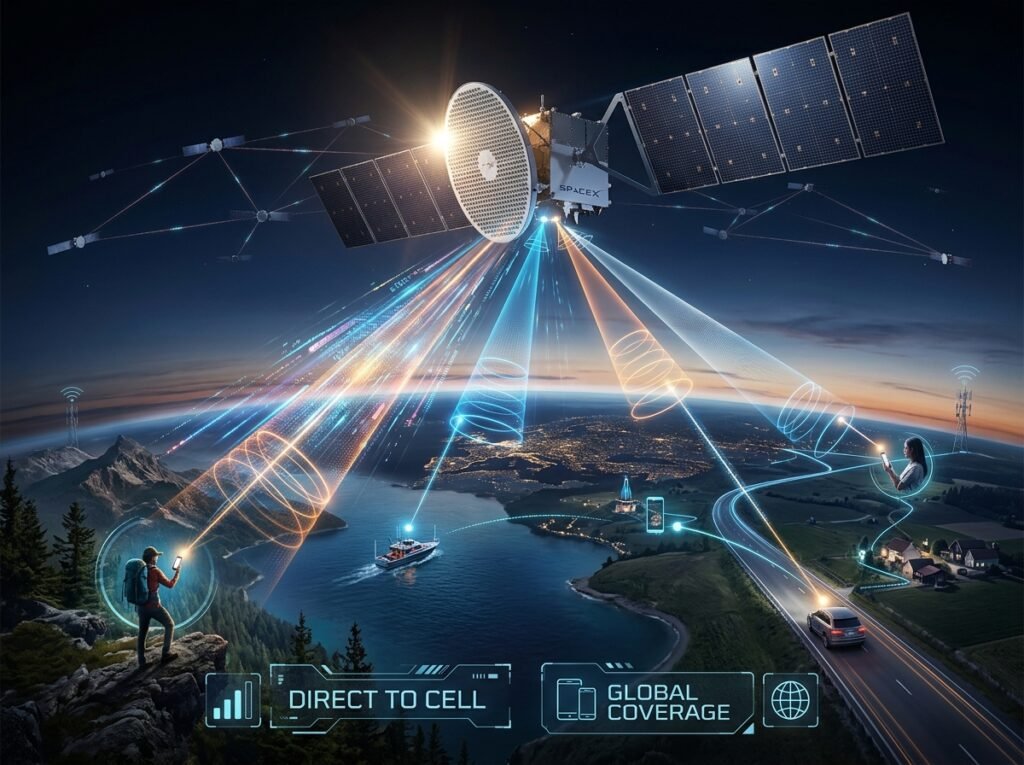
Starlink Direct to Cell has worked with mobile network operators to provide satellite connectivity to compatible devices. This partnership model allows satellites to extend existing networks into areas without normal cellular coverage.
However, relying on other operators can limit a company’s control over spectrum, pricing and customer relationships. Acquiring additional wireless spectrum could help SpaceX develop a more independent network.
The company could eventually combine satellite coverage, ground infrastructure and direct customer subscriptions. That would represent a much more ambitious business than providing emergency messaging or connectivity in remote areas.
SpaceX’s Latest Wireless Spectrum Deals
The October 2026 Low-Band Spectrum Agreement
One of the most significant developments came in October 2026, when SpaceX announced an agreement to acquire a nationwide portfolio of low-band spectrum licences covering up to 14 MHz of paired spectrum in the 800 MHz band.
The agreement is intended to strengthen Starlink Mobile’s ability to compete in the United States. SpaceX has said this spectrum could complement its existing mid-band resources and improve the service’s coverage.
Low-band signals generally travel farther and penetrate buildings more effectively than higher-frequency signals. This makes them useful for providing coverage across wide areas, although actual performance depends on network design, interference, device support and other technical factors.
The agreement remains subject to final approval from the US Federal Communications Commission. Therefore, it should not be treated as a completed deployment or proof that customers can already access a nationwide SpaceX cellular network.
The EchoStar Spectrum Agreement
SpaceX has also pursued spectrum assets through an agreement with EchoStar, a satellite and telecommunications company. The transaction was initially announced in September 2025 and was subsequently expanded.
The amended agreement increased the total consideration to approximately $20 billion, including cash and SpaceX shares. It covers valuable wireless spectrum licences that could support the next generation of Starlink Direct to Cell services.
Regulatory and transaction procedures matter here. The transfer of certain spectrum assets has involved separate stages, and the final acquisition process has its own conditions and timetable. The agreement should therefore not be confused with every licence already being fully transferred to SpaceX.
Together, the EchoStar transaction and the newer low-band spectrum agreement demonstrate the scale of SpaceX’s ambitions. The company is trying to secure the resources needed to move from satellite connectivity towards a broader wireless network.
How Will Starlink Mobile Work?
Connecting Phones Through Satellites
Traditional mobile phones usually connect to nearby ground-based cell towers. Starlink Direct to Cell takes a different approach by using satellites equipped with technology designed to communicate with compatible mobile devices.
The satellite effectively provides connectivity where a terrestrial signal is unavailable. Depending on the service, device compatibility and local arrangements, users may be able to send messages or access other supported functions.
The technology does not mean that every phone will automatically receive unrestricted satellite internet everywhere. Network capacity, supported frequencies, software, geography and service agreements all influence what customers can do.
Combining Satellites With Ground Infrastructure
SpaceX’s broader wireless ambitions extend beyond satellite connections alone. The company has described plans for an architecture that combines satellite-to-mobile connectivity with terrestrial infrastructure.
Satellites could provide wide-area coverage, while ground-based equipment and suitable spectrum help increase capacity in more populated locations. This hybrid approach could be particularly useful because cities contain many more simultaneous users than remote areas.
The challenge is to make the two parts work together seamlessly. Customers expect reliable calls, responsive data connections and consistent performance as they move between coverage areas. Delivering that experience requires careful network engineering and substantial investment.
Could SpaceX Challenge AT&T, Verizon and T-Mobile?
SpaceX’s plans could increase competitive pressure on established American mobile operators, particularly if Starlink Mobile eventually sells subscriptions directly to consumers.
AT&T, Verizon and T-Mobile have existing customer bases, extensive infrastructure and established relationships with device manufacturers. They also benefit from years of investment in terrestrial networks.
SpaceX brings different strengths. Its satellite network can reach areas that are expensive or difficult for traditional operators to cover. Its spectrum acquisitions could also help it improve service quality and become less dependent on partnerships.
Nevertheless, spectrum alone does not create a complete mobile network. SpaceX still needs sufficient capacity, suitable infrastructure, regulatory clearance and a commercially attractive service. Established operators will also have opportunities to improve their own satellite partnerships and network technology.
The likely outcome is not an immediate replacement of traditional mobile networks. Instead, SpaceX could become a stronger competitor in selected areas before expanding into a broader mobile offering.
What Could SpaceX Wireless Market Entry Mean for Consumers?
The most obvious potential benefit is improved connectivity in areas with poor mobile coverage. Rural communities, travellers and people working in remote locations could gain more reliable access to communications.
A wider satellite-mobile service might also improve emergency connectivity when conventional infrastructure is unavailable. However, satellite access should not be treated as a guaranteed emergency connection in every location or circumstance.
Pricing is another important factor. Greater competition could encourage mobile operators to improve coverage, introduce new packages or strengthen satellite partnerships. SpaceX might also create plans that combine home internet and mobile connectivity.
Yet lower prices are not guaranteed. Satellite networks require expensive equipment, launches, spectrum and ongoing operations. Customers will need to compare real-world performance, data limits, roaming rules and monthly charges before deciding whether a service offers better value.
Will Elon Musk Launch SpaceX Wireless Services in the UK?
The United Kingdom is an important market to watch, but US developments should not be mistaken for a confirmed UK mobile launch.
British mobile services operate under a different regulatory framework. Spectrum use, network deployment and consumer services must meet the relevant UK requirements. A US spectrum agreement does not automatically give SpaceX permission to use the same frequencies or operate an equivalent network in Britain.
Starlink already provides satellite broadband services in various markets, but satellite internet and a full mobile network are different products. Expanding direct-to-phone connectivity would require suitable technical arrangements, regulatory permissions and, where applicable, agreements with local operators.
For UK consumers, the important signs to watch will be official announcements about service availability, compatible phones, supported features, network partners and pricing. Until those details are confirmed, a full nationwide SpaceX mobile service in Britain should be regarded as a possibility rather than an established offering.
The Biggest Challenges Facing SpaceX
Regulatory Approval and Spectrum Availability
Wireless spectrum is a limited resource, and regulators control how companies can use it. SpaceX must comply with applicable licensing conditions and technical rules before deploying services using acquired spectrum.
International expansion introduces further complexity because permissions and available frequencies vary between countries.
Network Capacity and Reliability
Satellites can extend coverage, but they cannot provide unlimited capacity. A busy city may contain thousands of people trying to connect simultaneously. SpaceX will need sufficient satellite capacity and ground infrastructure to deliver a dependable experience.
Competition and Customer Expectations
Customers judge mobile services by everyday performance, not just technological ambition. Call quality, internet speed, coverage indoors, pricing and customer support will influence whether they switch providers.
SpaceX must prove that its service works reliably at scale. It also faces competitors with established networks and substantial resources.
Conclusion
Elon Musk’s SpaceX wireless market entry is becoming a serious development in telecommunications. The company’s October 2026 low-band spectrum agreement, alongside its broader EchoStar spectrum transaction, shows that SpaceX wants to expand Starlink beyond satellite broadband and into a more independent mobile connectivity business.
The opportunity is substantial. Satellite technology could improve coverage in remote areas, complement terrestrial networks and give consumers more options. However, the path to becoming a major wireless carrier involves regulatory approvals, network investment, technical challenges and competition from established operators.
For the UK, the prospect is worth watching, but a US expansion does not confirm a British launch. The clearest measure of progress will be official information about approvals, commercial availability, supported devices and pricing.
FAQs
What Is Elon Musk’s SpaceX Wireless Market Entry?
Elon Musk’s SpaceX wireless market entry is the company’s move towards a broader mobile telecommunications business through Starlink Mobile, satellite-to-phone connectivity, spectrum acquisitions and plans to combine satellite coverage with terrestrial infrastructure.
Is SpaceX Becoming a Mobile Network Operator?
SpaceX is pursuing a more direct role in mobile connectivity and has announced spectrum agreements intended to support Starlink Mobile. However, its transition into a major independent mobile carrier depends on regulatory approvals, network deployment and commercial execution.
What Is the Latest SpaceX Wireless Spectrum Deal?
In October 2026, SpaceX announced an agreement to acquire a nationwide portfolio of low-band spectrum licences covering up to 14 MHz of paired spectrum in the 800 MHz band. The agreement is intended to improve Starlink Mobile coverage and remains subject to final FCC approval.
Will Starlink Mobile Work on Ordinary Smartphones?
Starlink’s Direct to Cell technology is designed to connect compatible mobile devices through satellites. Supported functions depend on the service, device, network partner and local regulations. Customers should check official compatibility information rather than assume every phone supports every feature.
Will SpaceX Wireless Services Launch in the UK?
A full UK launch has not been established by the US spectrum announcements alone. SpaceX would need to meet applicable UK regulatory requirements and confirm its service arrangements before consumers could rely on a particular launch date, package or coverage promise.
Could SpaceX Make Mobile Networks Cheaper?
SpaceX could increase competition and encourage existing operators to improve their offerings. However, cheaper mobile plans are not guaranteed. Actual prices will depend on network costs, service capacity, competition, data allowances and the packages the company eventually offers.
For more updates visit: RANKIVO