


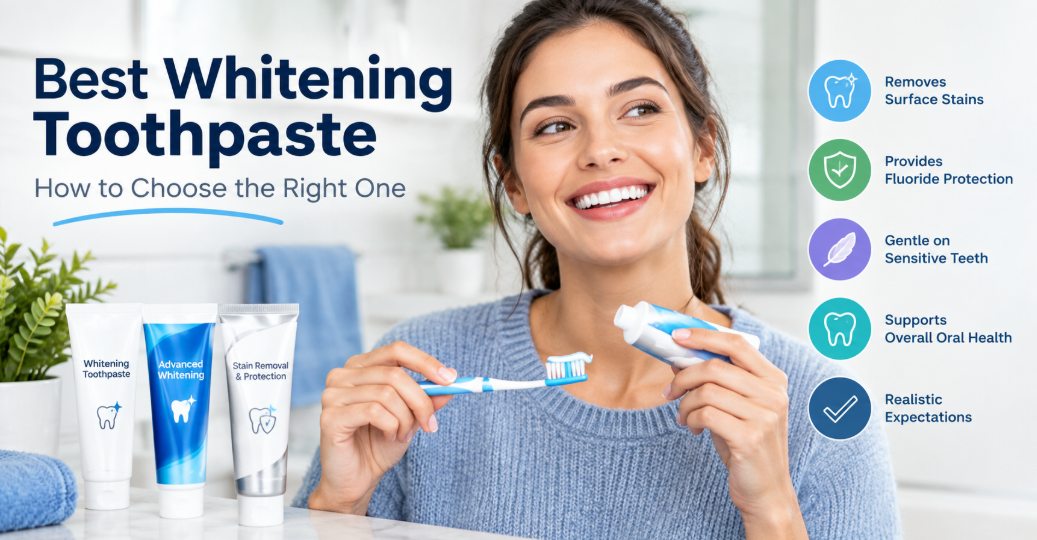

A brighter smile can make you feel more confident. However, choosing the best whitening toothpaste can feel confusing. Many products promise noticeably whiter teeth, yet they do not all work in the same way.
Some whitening toothpastes mainly remove surface stains. Others combine stain-removing ingredients with fluoride and polishing agents. Therefore, the right choice depends on your teeth, daily habits, and whitening goals.
It also helps to understand what toothpaste can realistically achieve. Whitening toothpaste can improve the appearance of surface stains, but it usually cannot change the natural colour of your teeth dramatically.
What Does Whitening Toothpaste Actually Do?
Whitening toothpaste is designed to help remove stains from the outer surface of your teeth. These stains can develop from drinks, foods, smoking, or other everyday habits.
Most whitening formulas use mild abrasives to help polish away these deposits. Some products also contain ingredients designed to help loosen or reduce visible staining.
As a result, whitening toothpaste can make stained teeth look cleaner and brighter. However, it does not work in exactly the same way as professional whitening treatments.
The natural colour of your teeth also matters. If your teeth have deeper internal discolouration, toothpaste alone may provide limited results.
How to Choose the Best Whitening Toothpaste
The best whitening toothpaste should do more than focus on a brighter smile. It should also support everyday oral health.
Fluoride is an important ingredient to look for in toothpaste. It helps protect teeth against decay and should remain part of a good daily brushing routine.
You should also consider how your teeth respond to whitening products. People with sensitive teeth may find some whitening formulas uncomfortable, especially when they contain stronger polishing ingredients.
A toothpaste with a gentle formula may therefore be more suitable for regular use.
Look for Stain Removal
Surface stain removal is one of the main reasons people choose whitening toothpaste. A suitable formula can help reduce stains that build up over time.
Coffee, tea, red wine, and tobacco can all contribute to visible staining. Regular brushing can help prevent these deposits from becoming more noticeable.
However, toothpaste cannot remove every type of discolouration. Deeper changes in tooth colour may need professional dental advice.
Consider Tooth Sensitivity
Sensitivity is another important factor when choosing a whitening toothpaste. Some people experience discomfort when consuming hot, cold, sweet, or acidic foods.
If whitening toothpaste makes your teeth feel uncomfortable, consider switching to a gentler product. You can also speak with a dentist if sensitivity continues.
Persistent sensitivity should not simply be treated as a normal part of whitening.
Check the Fluoride Content
Whitening should not come at the expense of basic dental care. Fluoride toothpaste helps protect against tooth decay, so it remains an important consideration.
For everyday use, choose a toothpaste that provides appropriate fluoride protection. Follow the product instructions and your dentist’s advice, particularly if you have specific dental needs.
Best Whitening Toothpaste for Surface Stains
If your main concern is staining from coffee or tea, a whitening toothpaste may help improve the appearance of your teeth.
Regular brushing is particularly useful because stains can become harder to remove when they build up. Brushing twice daily with proper technique can help maintain a cleaner smile.
However, results vary between people. The amount of staining, your diet, brushing habits, and the condition of your teeth can all affect the outcome.
A whitening toothpaste is therefore best viewed as part of a wider oral-care routine rather than a complete whitening treatment.
Can Whitening Toothpaste Make Teeth Completely White?
Whitening toothpaste cannot usually transform naturally darker teeth into extremely white teeth.
Its main purpose is to remove or reduce surface stains. It does not generally change the deeper colour of the tooth in the same way that professional whitening treatments can.
This distinction is important when choosing the best whitening toothpaste. If you expect dramatic whitening, a toothpaste may not meet your expectations.
A dentist can explain which whitening options are appropriate for your teeth and whether deeper discolouration has another cause.
How Often Should You Use Whitening Toothpaste?
The correct frequency depends on the specific product and your oral-health needs. Many whitening toothpastes are designed for normal daily brushing, while some formulas may be intended for more limited use.
Always follow the instructions on the packaging. Avoid brushing aggressively because more pressure does not mean better whitening.
In fact, brushing too hard can irritate your gums and contribute to enamel wear over time.
Use a soft-bristled toothbrush and gentle movements instead. Good technique matters just as much as the toothpaste you choose.
Whitening Toothpaste vs Professional Teeth Whitening
Whitening toothpaste and professional whitening treatments serve different purposes.
Toothpaste mainly helps manage surface staining. Professional whitening uses bleaching agents that can change the colour of the teeth more noticeably.
Therefore, someone looking for mild stain removal may be satisfied with whitening toothpaste. Someone seeking a larger change in tooth colour may need a different approach.
Before using stronger whitening products, consider speaking with a dental professional. This is especially important if you have fillings, crowns, veneers, gum problems, or significant sensitivity.
Common Mistakes When Using Whitening Toothpaste
One common mistake is expecting instant results. Whitening toothpaste usually works gradually through regular stain removal and brushing.
Another mistake is using too much pressure. Scrubbing harder can damage your gums and may increase sensitivity.
Some people also ignore the rest of their oral-care routine. Whitening toothpaste cannot replace good brushing habits, regular dental check-ups, and sensible food and drink choices.
Finally, do not assume that the most aggressive whitening formula is automatically the best whitening toothpaste. A product should balance stain removal with everyday comfort and oral protection.
How to Keep Teeth Looking Whiter
Your daily habits can make a noticeable difference to the appearance of your smile. Limiting frequent exposure to strongly staining drinks can help reduce new surface stains.
Good brushing habits also matter. Brush regularly, clean all tooth surfaces, and avoid rushing through your routine.
If you drink coffee or tea frequently, paying attention to your oral hygiene can help reduce visible staining over time.
Regular dental care is equally important. A dental professional can identify plaque, tartar, decay, gum problems, or other issues that toothpaste cannot solve.
Final Thoughts
The best whitening toothpaste is not necessarily the strongest whitening formula. Instead, look for a product that supports everyday oral health while helping reduce surface stains.
Fluoride protection, stain removal, sensitivity, and your personal dental needs should all influence your choice. Most importantly, keep your expectations realistic.
Whitening toothpaste can help your teeth look cleaner and brighter. However, deeper discolouration may require professional treatment. If you have ongoing sensitivity or concerns about tooth colour, speak with a dentist before trying stronger whitening methods.
FAQs
What is the best whitening toothpaste?
The best whitening toothpaste depends on your individual needs. Look for fluoride protection, effective surface stain removal, and a formula that feels comfortable during regular brushing.
Does whitening toothpaste really whiten teeth?
Whitening toothpaste can help remove surface stains and make teeth appear brighter. It usually cannot dramatically change the natural colour of teeth.
Can whitening toothpaste damage enamel?
Most reputable whitening toothpastes are designed for regular oral care when used as directed. However, aggressive brushing or excessive use of abrasive products may contribute to enamel and gum problems.
Is whitening toothpaste safe for sensitive teeth?
Some whitening formulas may increase sensitivity in certain people. If you experience discomfort, consider a gentler toothpaste and speak with a dentist if the problem continues.
How long does whitening toothpaste take to work?
Results vary depending on the amount of staining and your brushing habits. Surface stains may gradually become less noticeable with consistent use.
Can whitening toothpaste remove coffee stains?
Whitening toothpaste can help reduce some surface stains caused by coffee. However, heavy or older staining may require professional cleaning or another dental treatment.
For more updates visit: RANKIVO