


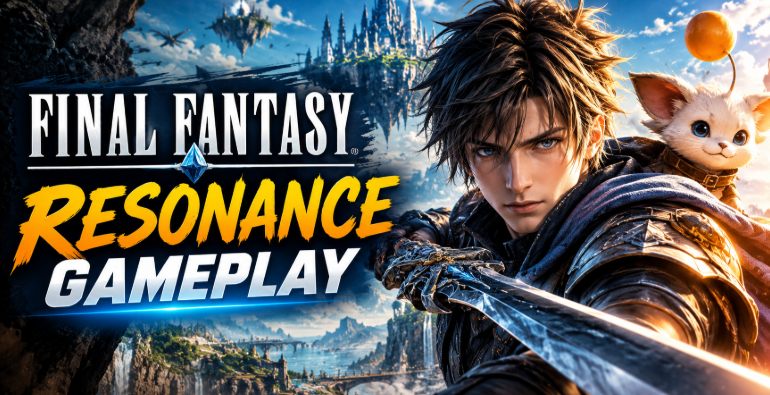

Final Fantasy Resonance gameplay combines classic turn-based battles with cinematic HD-2D visuals, strategic enemy weaknesses and abilities inspired by legendary Final Fantasy heroes. Rather than relying on fast reactions, players study the battle timeline, build their party and choose the right moment to unleash powerful attacks. The result aims to bring the series’ traditional role-playing foundations to a modern audience while keeping its familiar fantasy atmosphere.
The game follows Rain and his companions as they protect the world’s Crystals from a growing threat. Along the way, players can explore towns, travel across the world, enter dungeons and discover abilities through Visions. A free demo featuring the first chapter is available on PlayStation 5, with progress carrying over to the full game. Its planned launch date is 22 October 2026, making it one to watch for fans of classic Japanese role-playing games.
Final Fantasy Resonance Gameplay: How Does It Work?
At its core, Final Fantasy Resonance is a traditional role-playing game built around exploration, character progression and turn-based combat. Players travel through a fantasy world, speak with characters, accept quests and investigate locations connected to the main story. Battles then test how well the party uses its abilities, exploits enemy weaknesses and manages available resources.
The game is based on the opening story arc of Final Fantasy Brave Exvius, but it has been rebuilt as a console-style RPG rather than simply presented as a direct mobile port. Its design draws on familiar series elements, including elemental Crystals, airships, chocobos, moogles and powerful summons.
A key attraction is the way the game blends nostalgia with modern presentation. Its pixel-inspired characters and environments retain a classic Final Fantasy feel, while dynamic camera angles and cinematic effects make important scenes and attacks feel more dramatic.
HD-2D Graphics Bring the Fantasy World to Life
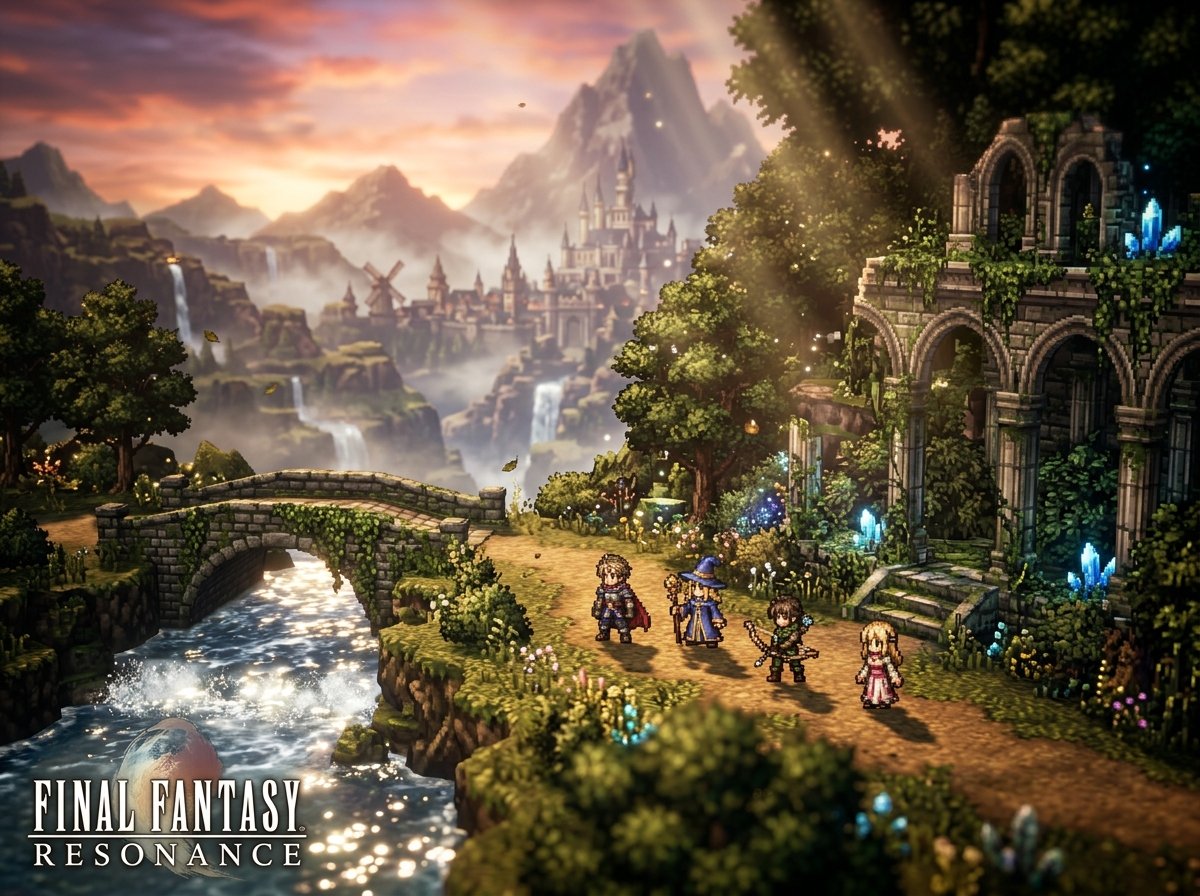
Final Fantasy Resonance is the first Final Fantasy entry to use Square Enix’s HD-2D visual approach. This style combines pixel-art characters and environments with three-dimensional depth, lighting and camera movement. It aims to preserve the charm of older role-playing games without making the presentation feel dated.
During exploration, the visual style gives towns, dungeons and landscapes a layered appearance. Battles can then shift the camera to highlight character abilities and major attacks. These changes help important moments stand out while keeping the recognisable pixel-art aesthetic.
For players who enjoy games such as Octopath Traveler, this presentation may feel familiar. However, Final Fantasy Resonance uses the style to support its own world, characters and combat systems. The appeal is not simply visual nostalgia; it is the combination of traditional RPG design and more expressive presentation.
How the Turn-Based Combat System Works
The battle system is one of the most important parts of Final Fantasy Resonance gameplay. Instead of controlling every movement in real time, players issue commands to their party members. A timeline at the top of the battle screen shows the upcoming order of actions for allies and enemies.
This timeline makes planning essential. Players can consider which character should attack first, whether an enemy might act before the party can defeat it, and when to use a powerful ability. A poorly timed attack may waste an opportunity, while a carefully planned sequence can create a major advantage.
Each character can use their own abilities alongside skills gained through an equipped Vision. Magic, physical attacks and support abilities serve different purposes, so the strongest choice depends on the enemy and the party’s current situation.
The system rewards preparation more than button speed. Learning enemy patterns, selecting suitable abilities and understanding the timeline can make difficult encounters more manageable.
Exploiting Weaknesses and Staggering Enemies
Enemies have weaknesses that players can exploit with suitable attacks. Hitting the right weakness reduces an enemy’s stagger gauge, bringing it closer to a vulnerable state. Once that gauge is depleted, the enemy becomes staggered, loses its opportunity to act for that turn and suffers reduced defence.
This creates a useful opening for the party. Rather than using every powerful skill immediately, players can focus on breaking an enemy first and then deliver stronger attacks while its defences are weakened.
The timing matters, especially when several enemies appear together. Players must decide whether to concentrate on one dangerous opponent or spread attacks across the group. Understanding the timeline helps them make that decision more effectively.
Extra Actions and Resonance Attacks
Breaking an enemy can trigger an extra phase, giving the character responsible for the break another opportunity to act. If the party staggers every enemy during the same turn, it triggers a sweeping stagger, allowing all party members to benefit from additional actions.
This is where the combat system becomes especially rewarding. Players can use the extra phase to deal more damage, apply useful effects or prepare a decisive finishing move. After a sweeping stagger, a Vision-specific Resonance attack can deliver a powerful special effect.
Resonance attacks are not limited to straightforward damage. Depending on the equipped Vision, they can provide area attacks, healing or other useful effects. Choosing the right Vision therefore influences more than a character’s basic abilities; it can shape the party’s entire battle strategy.
What Are Visions in Final Fantasy Resonance?
Visions are a central character-building system. They represent the crystallised essence of characters and heroes, granting abilities that can change how a party member fights. Players obtain them through story events and other progression activities, then equip them to access their associated skills.
The system draws inspiration from the job customisation found in earlier Final Fantasy games. However, Visions allow players to learn abilities and build combinations around their preferred approach. Once a character masters an ability, they can continue using it with a different Vision if they meet the relevant cost limit.
This flexibility encourages experimentation. A player might build one character around physical damage, another around magic and a third around healing or support. The best setup will depend on the challenges ahead and the abilities available to the party.
Classic Final Fantasy Heroes Join the Adventure
Visions also connect Final Fantasy Resonance to the wider series. Familiar heroes, including Cloud, Tidus and the Warrior of Light, appear as legacy characters whose powers can support the player’s team.
Players can discover Vision crystal sanctums throughout the world and obtain these special abilities through gameplay. This provides a different experience from the collection-focused systems associated with the original mobile game. Instead of relying on a mobile-style character collection loop, the console RPG focuses on exploration, progression and party customisation.
These appearances should appeal to long-time fans, although the value of each Vision will depend on its abilities and how well it fits a player’s chosen strategy.
Espers, Summons and Powerful Special Moves
Espers bring another familiar Final Fantasy feature into combat. Players can unlock these powerful summons by progressing through the story and completing certain side quests. When summoned, an Esper fights alongside the party for three turns before performing a powerful finishing move and leaving the battlefield.
Because an Esper has a limited time on the field, players should think about when to summon one. Using it during a difficult encounter can add pressure to enemies and help the party overcome a dangerous phase. Summoning too early, however, may mean wasting some of its potential.
The game also includes Limit Bursts, which become available when a character’s limit gauge fills. These powerful abilities offer another way to turn a battle around. Managing Limit Bursts, Visions, Resonance attacks and Espers gives players several tools to consider instead of relying on ordinary attacks alone.
Exploration, Quests and Side Activities
Combat is only one part of Final Fantasy Resonance gameplay. Outside battles, players can explore the world map, visit towns, speak with non-player characters and investigate dungeons. Quests provide additional objectives, while save points allow players to record progress and recover resources.
The game also features familiar ways to travel, including chocobos and airships. These elements help connect the world and give exploration a sense of progression. As players advance, they can access new locations and uncover more of the setting.
Optional content adds further reasons to explore beyond the main story. The game features challenging encounters and activities tied to valuable rewards, giving players opportunities to test developed parties and improve their builds.
For RPG fans, these activities can be as important as the main quest. Exploring carefully may reveal useful items, additional challenges and ways to strengthen characters before a difficult boss fight.
Final Fantasy Resonance Demo and Release Details
Players who want to try the game before buying can access a free PlayStation 5 demo featuring the entire first chapter. The demo introduces the opening story, exploration and turn-based combat, providing a practical way to see whether the gameplay suits their preferences.
Importantly, demo save data can carry over to the full game. This means players can continue from their existing progress rather than restarting the opening chapter after purchasing the complete release.
Final Fantasy Resonance is scheduled to launch on 22 October 2026. Announced platforms include PlayStation 5, Nintendo Switch, Nintendo Switch 2, Xbox Series X|S and PC through Steam and the Microsoft Store on Windows.
For UK players, the announced standard edition price is £49.99, while the Digital Deluxe Edition is listed at £54.99. Players should check the relevant store for current availability, regional pricing and edition details before purchasing.
Conclusion
Final Fantasy Resonance gameplay brings classic turn-based strategy into a modern HD-2D presentation. Its timeline-based battles encourage careful planning, while enemy weaknesses, stagger phases and Resonance attacks reward players who build effective combinations. Visions add depth to character customisation, and Espers provide another powerful option during difficult encounters.
Beyond combat, exploration, quests, familiar Final Fantasy heroes and optional challenges give players plenty of reasons to keep progressing. The free PS5 demo offers a way to experience the opening chapter before committing to the full release. For fans of traditional JRPGs, Final Fantasy Resonance could be an appealing blend of nostalgic design and modern presentation.
FAQs
Is Final Fantasy Resonance turn-based or action-based?
Final Fantasy Resonance uses turn-based command combat rather than real-time action battles. Players issue commands to their party and use the battle timeline to plan attacks, manage abilities and respond to enemy actions.
What makes Final Fantasy Resonance gameplay different?
Its main features include HD-2D graphics, weakness-based stagger mechanics, extra action phases and powerful Resonance attacks. The Vision system also lets players customise characters by learning and combining abilities.
What are Visions in Final Fantasy Resonance?
Visions represent the essence of heroes and other characters, providing abilities when equipped. Players can unlock and develop them, then build combinations that suit their preferred combat strategy.
Can you play as Cloud in Final Fantasy Resonance?
Cloud appears as a legacy Final Fantasy hero through the Vision system. Players can obtain his Vision through gameplay and use its abilities to support their party, rather than treating him as a separate main character throughout the adventure.
Is there a free Final Fantasy Resonance demo?
Yes. A free demo for PlayStation 5 includes the entire first chapter. Players can carry their demo save data into the full game, allowing them to continue their progress after purchasing it.
When does Final Fantasy Resonance release?
Final Fantasy Resonance is scheduled to release on 22 October 2026. Announced platforms include PlayStation 5, Nintendo Switch, Nintendo Switch 2, Xbox Series X|S and PC. Check your preferred store for the latest availability and pricing.
For more updates visit: RANKIVO