


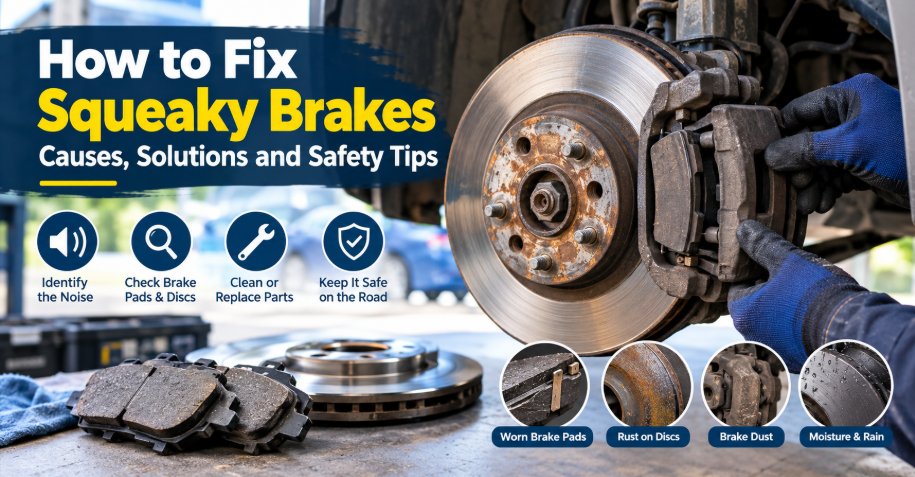

Squeaky brakes can be annoying, but the noise should never be ignored automatically. Sometimes, brake squeal comes from harmless vibration or moisture. In other cases, it can indicate worn brake pads or another brake problem.
Learning how to fix squeaky brakes starts with identifying the cause. The right solution depends on when the noise happens, how loud it is, and whether you notice other changes while braking.
If your brakes squeak occasionally, you may be dealing with moisture, surface rust or light brake dust. However, persistent noise deserves closer attention because your braking system is essential for safe driving.
Why Are My Brakes Squeaking?
Brake squeal usually comes from vibration between brake components. When you press the brake pedal, the brake pads press against the discs or drums. Small vibrations can create a high-pitched sound that you hear through the vehicle.
Moisture is one common reason for temporary brake noise. After rain or when a car has been parked overnight, a thin layer of moisture can form on the brake discs. The noise often disappears after normal braking removes it.
Brake dust and dirt can also contribute to squeaking. The material can collect around the braking components and affect the way the pads contact the discs.
How to Fix Squeaky Brakes
The first step is to determine whether the noise is temporary or persistent. If your brakes squeak briefly after rain or the car has been parked for some time, gentle normal braking may clear the surface moisture or light rust.
However, do not deliberately brake aggressively just to remove noise. Drive normally and allow the brakes to reach their usual operating temperature.
If the squeaking continues during regular driving, the brake pads and discs should be inspected. Worn brake pads may contain a wear indicator designed to produce a noticeable sound when the pad material becomes low.
A professional inspection may be necessary if you cannot identify the cause yourself. Brake components operate under high temperatures and significant forces, so incorrect repairs can create serious safety risks.
Check the Brake Pads
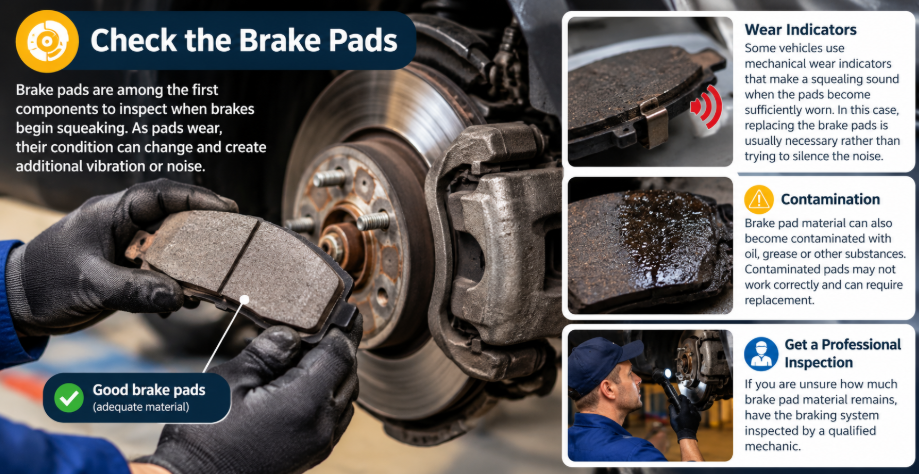
Brake pads are among the first components to inspect when brakes begin squeaking. As pads wear, their condition can change and create additional vibration or noise.
Some vehicles use mechanical wear indicators that make a squealing sound when the pads become sufficiently worn. In this situation, replacing the brake pads is usually necessary rather than trying to silence the noise.
Brake pad material can also become contaminated with oil, grease or other substances. Contaminated pads may not work correctly and can require replacement.
If you are unsure how much brake pad material remains, have the braking system inspected by a qualified mechanic.
Inspect the Brake Discs
Brake discs can contribute to squeaking when they develop surface corrosion, uneven wear or other damage. A vehicle that has been parked for an extended period may develop visible surface rust on its discs.
Light surface rust can normally disappear through ordinary braking. Persistent corrosion, deep scoring or uneven disc surfaces are different matters and should be assessed professionally.
A mechanic can check the condition of the discs and determine whether they remain suitable for use. Depending on their condition, cleaning, machining or replacement may be considered.
Can Brake Dust Cause Squeaking?
Yes, brake dust can contribute to brake noise. Braking naturally creates small amounts of friction material, which can collect around the wheel and braking components.
Dust alone does not necessarily mean that something is wrong. However, excessive dirt or debris can affect brake operation and contribute to unwanted sounds.
Cleaning brake components requires care. Avoid spraying unsuitable household cleaners onto brake parts, and never contaminate brake pads or discs with oil or grease.
Brake cleaner designed for automotive use may be appropriate for certain components, but the correct procedure depends on the vehicle and brake system.
Why Do Brakes Squeak When Cold?
Cold brakes can sometimes make more noise than brakes operating at normal temperature. Temperature affects friction between the brake pad and disc, which can change the vibration produced during braking.
This type of squeaking may disappear after the brakes warm up. If the brakes work normally and the noise is only temporary, it may not indicate a serious fault.
Nevertheless, repeated or increasingly loud squeaking should not simply be dismissed because the brakes are cold. Changes in braking performance are more important than the noise alone.
Why Do Brakes Squeak After Rain?
Rain can leave moisture on brake discs. When the vehicle first moves, the brake pads can rub against the damp or lightly oxidised surface and create a temporary squeak.
This is particularly common when a vehicle has been parked outside overnight. In many cases, the sound disappears after several normal stops.
If the noise continues well after the brakes have dried, another cause may be responsible. Persistent squeaking should then be investigated rather than attributed to rain.
Do New Brake Pads Squeak?
New brake pads can sometimes make noise while they settle against the brake discs. The friction surfaces need to establish consistent contact, and the braking system may sound different during this period.
Incorrectly fitted components, unsuitable pads or problems with the discs can also cause noise after brake work. Therefore, new brakes should not automatically be assumed to be the cause of harmless squeaking.
If the noise began immediately after brake pads or discs were replaced and remains persistent, return to the garage that carried out the work. They can check the installation and condition of the components.
When Should You Stop Driving?
Squeaking alone does not always mean that a vehicle is unsafe to drive. However, brake noise combined with other symptoms requires immediate attention.
Grinding sounds, severe vibration, pulling to one side, a soft or unusual brake pedal, reduced braking performance or warning lights can indicate a more significant problem.
If braking performance has changed, avoid continuing to drive unnecessarily. Arrange an inspection by a qualified professional and follow the vehicle manufacturer’s safety guidance.
Your brakes should never be treated as a cosmetic repair. A quiet brake is not automatically a healthy brake, and a noisy brake is not automatically a failed brake.
Can You Fix Squeaky Brakes Yourself?
Some basic inspection and maintenance tasks can be performed by experienced vehicle owners. However, brake repairs require proper knowledge, suitable tools and an understanding of the vehicle’s braking system.
Replacing brake pads incorrectly can affect braking performance. Contaminating friction surfaces can also create dangerous problems.
For this reason, DIY repairs should only be attempted when you fully understand the procedure for your specific vehicle. If there is any doubt about the condition or installation of a brake component, professional inspection is the safer approach.
How to Prevent Squeaky Brakes
Regular vehicle maintenance can help reduce avoidable brake problems. Have the braking system checked during routine servicing and pay attention to changes in noise, pedal feel and braking performance.
Avoid ignoring unusual sounds simply because the vehicle still stops. Brake components wear over time, and identifying problems early can prevent more extensive repairs.
Using the correct brake components for your vehicle also matters. Brake pads, discs and other parts should meet the specifications required for your particular car.
Conclusion
Knowing how to fix squeaky brakes starts with understanding why the noise is happening. Temporary squeaking after rain, cold weather or overnight parking can have simple explanations. Persistent squealing, however, may indicate worn pads, contaminated components, damaged discs or another brake issue.
Never rely on noise alone to judge brake condition. If you notice grinding, vibration, reduced braking performance, pulling or an unusual brake pedal, arrange a professional inspection promptly.
Because brakes are a critical safety system, the correct repair is more important than simply making the noise disappear.
FAQs
Are squeaky brakes dangerous?
Squeaky brakes are not always dangerous, but persistent noise can indicate a brake problem. If squeaking occurs alongside reduced braking performance, grinding, vibration or an unusual pedal feel, the vehicle should be inspected promptly.
How can I fix squeaky brakes at home?
The appropriate solution depends on the cause. Temporary moisture-related squeaking may disappear after normal driving, while worn pads or damaged discs require proper repair. Avoid applying oil or household products to brake components.
Why do my brakes squeak but still work?
Brakes can continue working while producing noise because of vibration, moisture, brake dust or component wear. Effective braking does not necessarily mean every brake component is in good condition.
Why do my brakes squeak in the morning?
Morning brake squeaking is often associated with moisture or light surface corrosion that develops while the vehicle is parked. The sound may disappear after normal braking as the surfaces dry and clean up.
Why are my brakes squeaking after new pads?
New pads can sometimes produce temporary noise while their friction surfaces settle. However, persistent squeaking after brake work can also result from installation issues, incompatible components or disc condition.
Can brake dust make brakes squeak?
Brake dust can contribute to brake noise, although it is not always the main cause. Excessive dirt around braking components can affect contact and vibration. Proper cleaning should be carried out using suitable automotive procedures.
For more updates visit: RANKIVO