


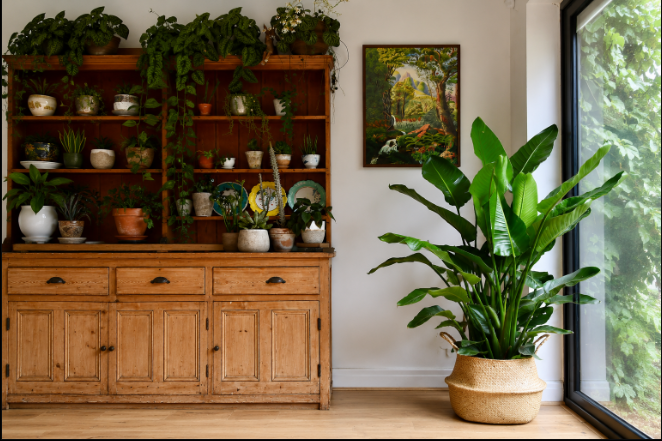

Walk into a room with a six-foot fiddle leaf fig in the corner and everything else in the space suddenly looks better designed. That’s the quiet power of large indoor plants — they don’t just fill empty space, they change how a room feels.
If you’ve ever stood in a nursery staring at a wall of options, wondering which giant plant will actually survive in your living room (and not just your Pinterest board), this guide is for you. We’ll cover the best large indoor plants for different light conditions, how to care for them without killing them in month two, and the mistakes most beginners make.
What Counts as a “Large Indoor Plant”?
Generally, a large indoor plant is anything that reaches 3 feet or taller at maturity when grown in a pot. Some, like the Ficus lyrata or Dracaena fragrans, can eventually touch your ceiling. These plants work as statement pieces, room dividers, or a way to soften bare corners that furniture alone can’t fix.
Unlike small tabletop plants, large ones need more thought before you buy: pot size, light direction, ceiling height, and how much weight your floor (and your budget) can handle.
Why People Choose Big Plants Over Small Ones
- Visual impact — one large plant often looks more intentional than five small ones scattered around.
- Air quality support — larger plants have more leaf surface area, which can help with humidity and general indoor air freshness, though they’re not a replacement for ventilation.
- Fewer plants to manage — watering one large plant weekly is often easier than juggling a dozen small pots.
- Better value over time — a well-cared-for large plant can live for decades, sometimes outlasting the furniture around it.
Best Large Indoor Plants for Different Light Levels
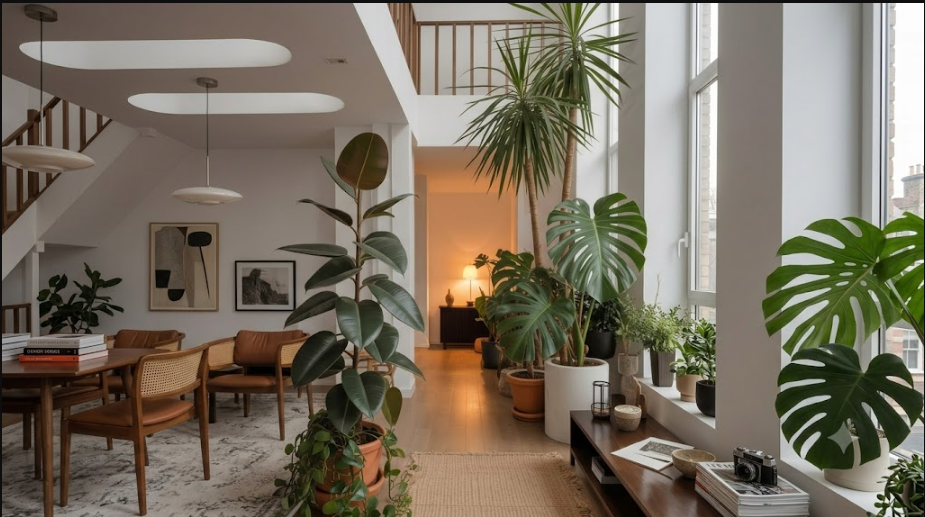
Light is the single biggest factor in whether a large plant thrives or slowly declines. Here’s a quick comparison to help you match a plant to your actual room, not the room you wish you had.
| Plant Name | Light Needs | Height (Indoors) | Difficulty | Pet Safe? |
|---|---|---|---|---|
| Fiddle Leaf Fig | Bright, indirect | 6–10 ft | Moderate–Hard | No |
| Rubber Plant | Medium–bright | 6–8 ft | Easy | No |
| Bird of Paradise | Bright, direct/indirect | 5–7 ft | Moderate | No |
| Monstera Deliciosa | Medium–bright | 6–8 ft | Easy | No |
| Snake Plant (large varieties) | Low–bright | 3–5 ft | Very Easy | No |
| Areca Palm | Bright, indirect | 5–7 ft | Easy | Yes |
| Dracaena (various) | Low–medium | 4–8 ft | Easy | No |
| Corn Plant | Medium | 4–6 ft | Easy | No |
| Norfolk Island Pine | Bright, indirect | 4–6 ft | Moderate | Yes |
| Parlor Palm (mature) | Low–medium | 3–5 ft | Easy | Yes |
For Bright, Sunny Rooms
If your space gets several hours of direct or bright indirect sun, you have the most options. Fiddle leaf figs and bird of paradise plants are popular for a reason — their large, glossy leaves catch light beautifully. Just know that fiddle leaf figs are fussy about being moved or drafted; once you find a spot they like, don’t rearrange the furniture around them.
For Medium-Light Rooms
Most apartments and offices fall into this category — some natural light, but not blasting sun all day. Monstera deliciosa, rubber plants, and corn plants handle this range well and are far more forgiving than the sun-lovers above.
For Low-Light Corners
Not every home has a sunny reading nook. For dim hallways or north-facing rooms, large snake plants and certain dracaena varieties are genuinely low-maintenance. They tolerate inconsistent watering and low light better than almost anything else on this list.
How to Care for Large Indoor Plants (Without Overthinking It)
Watering
The most common mistake isn’t underwatering — it’s overwatering. Large plants in big pots hold moisture longer than you’d expect. Before watering, push a finger about two inches into the soil. If it’s still damp, wait a few more days.
Light Rotation
Plants grow toward light, which means one side can end up bare over time. Turning the pot a quarter turn every couple of weeks keeps growth even on all sides.
Repotting
Large plants don’t need repotting often — usually every 1–2 years, or when roots start circling the bottom of the pot. Go up just one pot size at a time; a pot that’s too big can hold excess water and lead to root rot.
Humidity and Dust
Big leaves collect dust, which blocks light absorption. Wiping leaves down with a damp cloth every few weeks isn’t just cosmetic — it actually helps the plant function better.
Common Mistakes to Avoid
- Buying based on looks alone — a plant that looks stunning in a bright showroom may struggle in your dim apartment.
- Ignoring pot drainage — a pot without a drainage hole is one of the fastest ways to lose a large plant to root rot.
- Overcrowding roots — a plant that’s outgrown its pot will show it through yellowing leaves and stunted growth.
- Fertilizing too often — most large indoor plants only need feeding during their active growing season, typically spring through early fall, and far less (or not at all) in winter.
Choosing the Right Plant for Your Space and Lifestyle
Before buying, it helps to be honest about three things: how much natural light your room actually gets (not how much you think it gets), how often you’ll realistically remember to water, and whether pets or small children will be around the plant. Several popular large indoor plants — including fiddle leaf figs, monstera, and dracaena — are toxic if chewed on, so pet owners may want to lean toward safer options like areca palms or parlor palms.
Conclusion
Large indoor plants aren’t just decoration — they’re a long-term relationship with something living in your home. The right choice depends less on trends and more on your actual light, space, and habits. Start with a plant that matches your real conditions rather than the one that looks best online, and you’ll likely end up with a healthier plant and a lot less frustration.
If you’re new to this, snake plants and dracaenas are a forgiving place to start. Once you’ve built confidence, a fiddle leaf fig or bird of paradise can become the centerpiece your room has been missing.
FAQs
What is the easiest large indoor plant to keep alive?
Large snake plants and dracaena varieties are widely considered the easiest, since they tolerate low light and irregular watering better than most large plants.
How often should I water a large indoor plant?
Most large indoor plants need watering every 7–14 days, depending on light, pot size, and season. Always check soil moisture before watering rather than following a fixed schedule.
Do large indoor plants really improve air quality?
Plants do process carbon dioxide and release oxygen, and larger plants have more leaf area to do this. However, their effect on overall indoor air quality in a real home is modest — good ventilation still matters more.
Can large indoor plants survive in low light?
Some can. Snake plants, ZZ plants, and certain dracaena varieties tolerate low light well, though they’ll grow more slowly than in brighter conditions.
How big of a pot does a large indoor plant need?
It depends on the plant’s current root size, but generally a pot 2–4 inches wider in diameter than the current one is enough. Oversized pots can hold too much moisture and cause root problems.
Are large indoor plants safe for homes with pets?
Not all of them. Popular choices like fiddle leaf figs, monstera, and dracaena are toxic to cats and dogs if ingested. Areca palms, parlor palms, and Norfolk Island pines are generally considered pet-safe alternatives.
For more updates visit: RANKIVO