


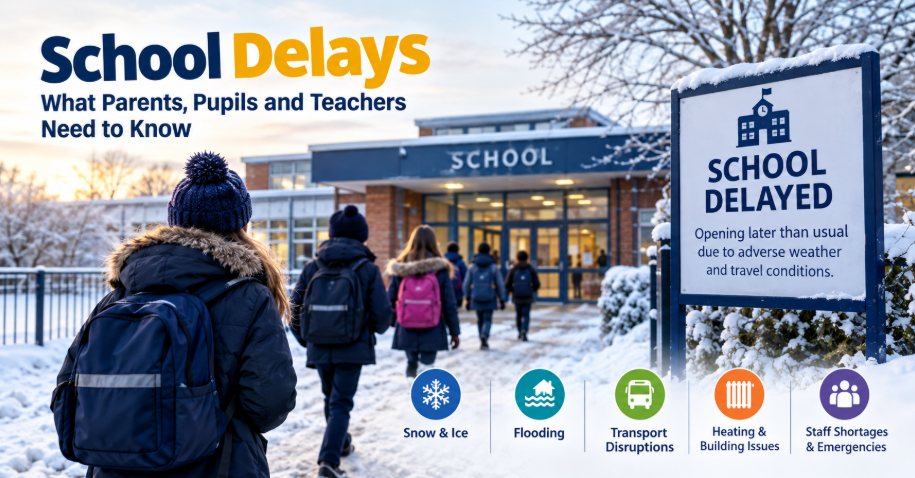

School delays happen when a school opens later than its normal time, often because of severe weather, transport problems, safety concerns or unexpected operational issues. For parents, pupils and teachers, knowing whether a school is delayed or closed helps them plan the day and avoid unnecessary journeys. However, the phrase “school delays” can mean different things depending on the country, school district and situation.
In the United Kingdom, schools generally make their own decisions about delayed openings and closures, following local authority guidance and their own safety procedures. Heavy snow, ice, flooding, heating failures and staff shortages can all affect whether a school opens as usual. The best approach is to check official school communications before leaving home rather than relying on unverified social media posts.
What Are School Delays?
School delays occur when a school changes its usual opening time because it cannot safely or practically begin the school day as planned. For example, a school that normally opens at 8:30 am might ask pupils to arrive at 10 am after overnight snowfall. The exact arrangements depend on the school’s circumstances and local guidance.
A delayed opening is different from a full school closure. During a delay, the school expects to open later that day, although the decision may change if conditions worsen. A closure means pupils should not attend the school site for the affected period.
Some schools may also delay individual activities, such as morning clubs, school buses or lessons, without changing the official opening time. Parents should read the complete announcement carefully because a change to transport arrangements does not always mean the school itself is closed.
Why Do Schools Experience Delays?
Snow, Ice and Freezing Temperatures
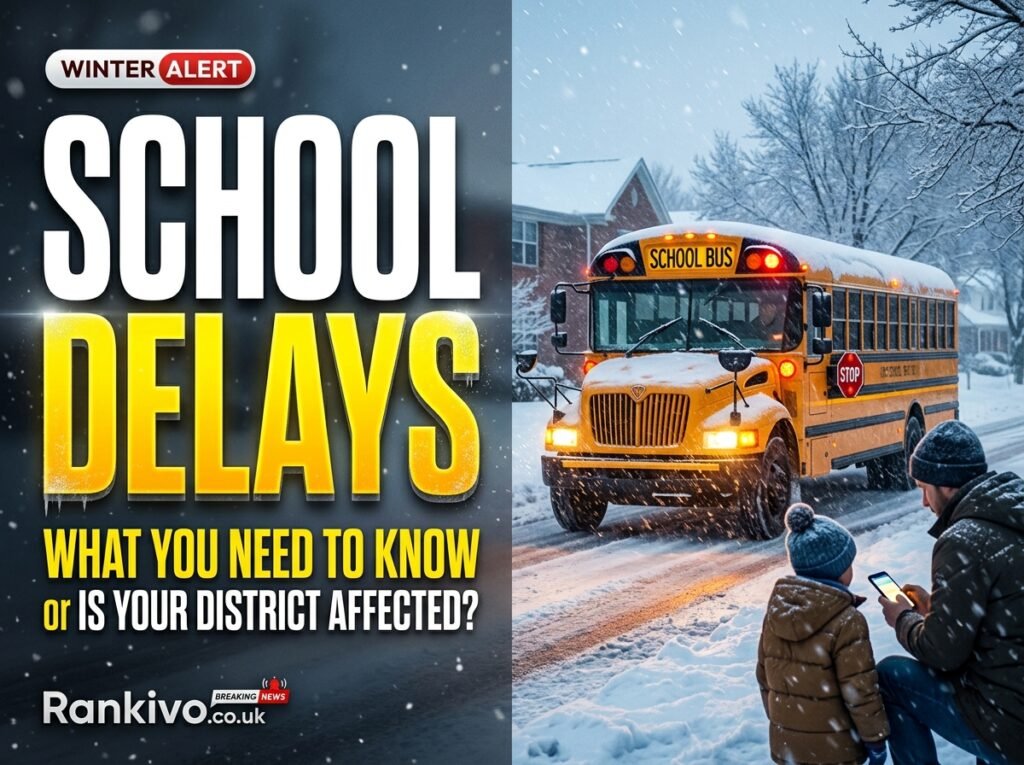
Winter weather is one of the most familiar reasons for school delays. Snow can make roads difficult to use, while ice creates dangerous conditions on pavements, playgrounds and school entrances. Even a small amount of freezing rain can make the journey to school hazardous.
School leaders may need to assess whether staff can reach the site safely, whether heating systems are working and whether paths can be cleared. Rural schools can face additional challenges because their pupils and employees may travel longer distances on untreated roads.
A school does not necessarily close whenever snow falls. The decision depends on local conditions, the safety of the site, transport availability and whether enough staff can attend.
Heavy Rain and Flooding
Flooding can disrupt school journeys even when the school building remains unaffected. Roads may become impassable, public transport can be interrupted and water may enter school buildings or surrounding grounds.
Schools in areas vulnerable to flooding may need to monitor weather warnings and local travel conditions. If safe access cannot be maintained, leaders may delay opening or close the site until the situation improves.
Parents should never attempt to cross a flooded road simply to reach school on time. A school attendance issue is not worth risking personal safety.
Transport Disruptions
School buses, trains and local bus services can experience delays because of accidents, bad weather, roadworks or mechanical problems. These disruptions can affect pupils who depend on public transport or organised school transport.
In some cases, a school remains open even when a particular bus service is cancelled. In others, widespread transport problems may contribute to a delayed opening. Parents should check both the school’s announcement and the relevant transport operator’s updates.
Heating, Electricity and Building Problems
Schools need safe buildings, adequate heating in cold conditions and functioning essential facilities. A heating breakdown, water supply problem, power failure, fire alarm fault or structural concern may prevent normal operations.
School leaders may delay opening while engineers investigate or repairs take place. If the problem cannot be resolved quickly, the school may close for the day. These decisions depend on the seriousness of the issue and whether the building remains suitable for pupils and staff.
Staff Shortages and Unexpected Emergencies
A school needs enough appropriately qualified staff to supervise pupils and deliver lessons safely. Severe weather, illness or an unexpected emergency can make normal staffing levels difficult to maintain.
Although schools may try to arrange cover, they might delay or close if they cannot operate safely. The school should communicate any change through its established channels.
How to Check School Delays in the UK
Check the School’s Official Website
The school’s own website is usually a sensible first place to look for an announcement. Some schools display urgent notices on their homepage, while others maintain a dedicated page for closures and emergency updates.
Look for the date of the message, the affected school or campus, the expected opening time and any instructions about transport or attendance. An old closure notice may remain visible after circumstances have changed, so check that the information applies to the current day.
Read Emails, Text Messages and Parent App Notifications
Many schools send urgent information directly to parents through text messages, email or a school communication app. These messages may explain whether pupils should arrive later, stay at home or use an alternative entrance.
Keep your contact details up to date with the school. If notifications do not arrive, check the app settings and junk email folder before assuming that no announcement has been made.
Check Your Local Council’s Website
Local councils in England, Scotland and Wales may publish school closure information for schools in their areas. Availability and coverage vary, and some schools may communicate independently rather than appearing on a council list.
Search for your local authority’s official school closure page and confirm that the information matches your child’s school. Do not assume that every school in a town follows the same opening arrangements.
Follow Official Weather and Travel Updates
Weather warnings and transport announcements can help explain why delays are happening. However, a weather warning does not automatically mean that every school in the affected area will close.
Use official weather information and the relevant transport operator’s updates to understand the conditions. Then confirm the actual attendance decision with the school or local authority.
What Should Parents Do When School Is Delayed?
The first step is to establish whether the school is delayed, fully closed or operating normally. Read the complete announcement rather than relying on a headline or a message shared by another parent.
If the school will open later, check the revised arrival time and whether breakfast clubs, nursery sessions, school buses or other services will run. These arrangements may differ from the normal timetable. Do not assume that every activity will restart at the same time as lessons.
If the school is closed, follow its instructions about attendance, remote learning or alternative arrangements. Parents should also consider childcare and work commitments as early as possible. If the announcement is unclear, contact the school through its official communication channel.
Above all, prioritise safety. If the journey is dangerous, check the school’s instructions and contact staff to explain the circumstances. Avoid making assumptions about attendance rules, because policies can differ between schools and local authorities.
Do School Delays Affect Attendance?
A delayed opening does not automatically mean that pupils should arrive at their usual time. Parents should follow the revised arrangements published by the school.
If a school closes, its attendance procedures will determine how the closure is recorded. Parents should not assume that every weather-related absence is treated identically, particularly when a school remains open but travel conditions are difficult.
If a child cannot travel safely while the school remains open, contact the school promptly. Explain the situation and ask how the absence will be handled. Keeping a record of the school’s announcement and any relevant travel disruption may also help clarify matters later.
Are School Delays the Same Across the UK?
School arrangements vary across England, Scotland, Wales and Northern Ireland. Local authorities, school governing bodies and individual schools may have different responsibilities and communication procedures.
Some areas publish centralised closure lists, while others rely more heavily on individual schools. Independent schools may also follow their own procedures, subject to relevant legal and safety requirements.
For this reason, a delay announced by one school should not be treated as confirmation that nearby schools are affected. Even within the same town, schools may make different decisions because of their buildings, staffing, transport links and local conditions.
How Can Families Prepare for Unexpected School Delays?
Families can reduce last-minute confusion by deciding in advance where they will check announcements. Save the school’s website, parent app and relevant local council page so you can access them quickly when conditions change.
During periods of severe weather, check updates before starting the school journey. Keep your phone available for official messages and allow extra time if travel conditions are uncertain.
It can also help to discuss backup childcare arrangements with trusted family members or carers. Parents who depend on school buses should know where the transport operator publishes service updates. A simple plan makes it easier to respond calmly when normal routines change.
Conclusion
School delays can happen because of snow, ice, flooding, transport disruption, building problems or staffing emergencies. Their purpose is to help schools respond to circumstances that may prevent a safe or practical start to the school day.
For UK families, the most reliable way to confirm a delay is to check the school’s official communications and, where available, the local council’s closure information. Weather and transport updates provide useful context, but they do not replace the school’s own announcement.
Before leaving home, confirm the latest opening time, check any changes to school transport and follow the instructions provided. Staying informed and putting safety first can make unexpected school delays much easier to manage.
FAQs
What do school delays mean?
School delays mean a school plans to start later than its normal opening time. They may happen because of severe weather, transport problems, building issues or staffing difficulties. The school should communicate the revised arrival time and any changes to its usual arrangements.
Why are schools delayed during snow?
Snow and ice can make roads, pavements and school entrances unsafe. Schools may also struggle to maintain adequate staffing if employees cannot travel safely. Leaders assess local conditions before deciding whether to delay opening, close the school or continue operating normally.
How can I find out if my child’s school is delayed?
Check the school’s official website, parent app, email or text messages first. Your local council may also publish school closure information. Confirm that any announcement applies to the correct school and current date before changing your plans.
Do all schools close when there is a weather warning?
No. A weather warning does not automatically close every school in an area. Decisions depend on local conditions, building safety, transport access and staffing. Always check the specific school’s announcement rather than assuming that a warning means closure.
Should my child go to school at the normal time during a delay?
Follow the revised instructions from the school. If the opening time has changed, do not assume that pupils should arrive at their usual time. Check whether transport, breakfast clubs and other services will operate on a different schedule.
Are school delays and school closures the same thing?
No. A delay usually means the school expects to open later that day, while a closure means pupils should not attend the site for the affected period. A delayed opening can still turn into a full closure if conditions worsen, so check for further updates.
For more updates visit: RANKIVO